Stress: Symptoms, Causes, Effects & Proven Stress Management Techniques
Explore what stress is, its effects on the mind and body, common triggers, challenges, and effective strategies to build resilience and maintain balance in daily life.
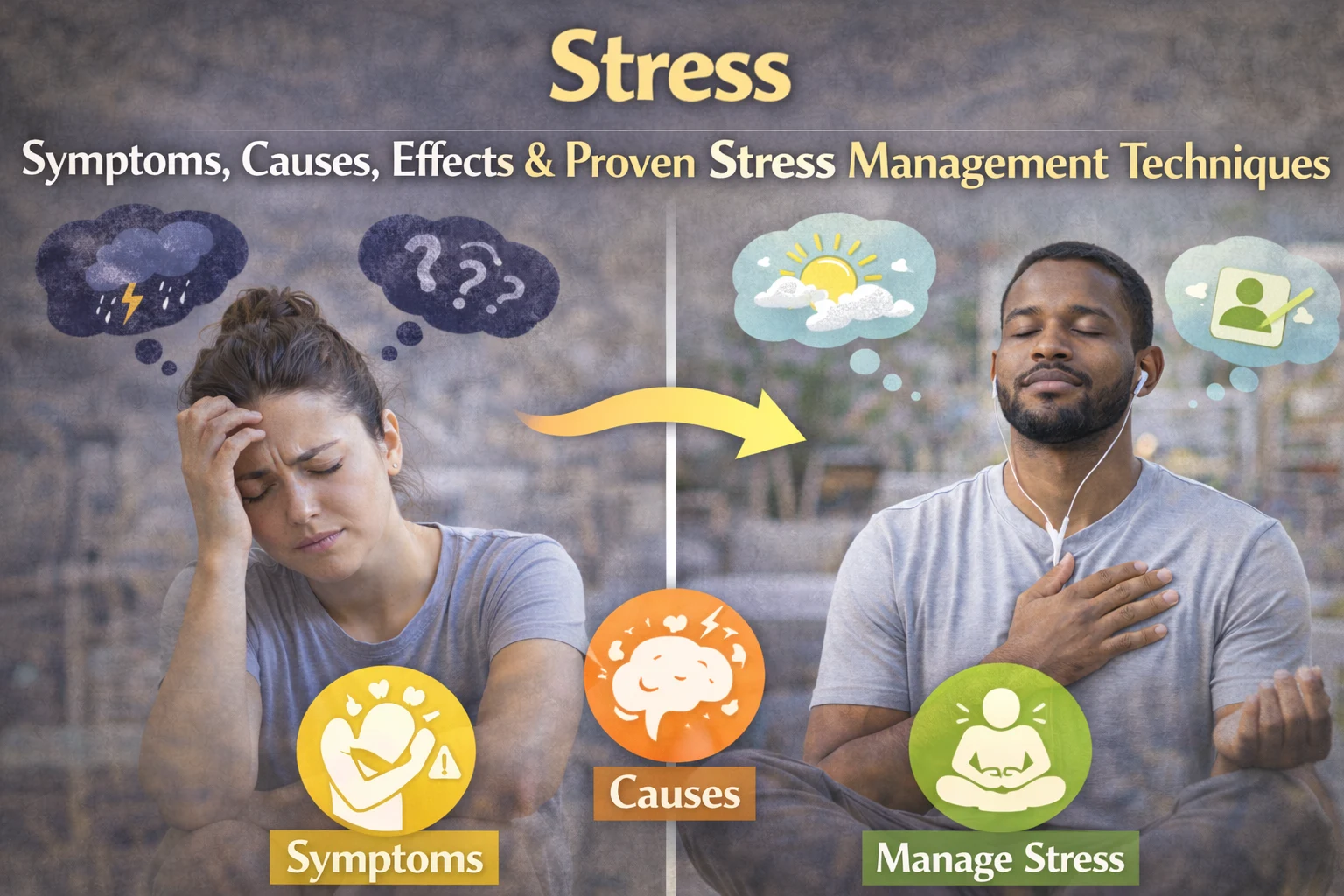
What Is Stress?
Stress is the body’s natural reaction to challenges or demands. It triggers physical, emotional, and mental responses that prepare us to face difficult situations.
While short-term stress can sharpen focus and energy, long-term or unmanaged stress may affect health, mood, and relationships.
Types of Stress
- Acute Stress: Short-term stress caused by immediate challenges, like deadlines or unexpected events.
- Chronic Stress: Ongoing stress from long-term pressures such as financial problems or work overload.
- Episodic Acute Stress: Frequent stressful situations leading to a cycle of tension and anxiety.
- Positive Stress (Eustress): A motivating type of stress that pushes you to perform and achieve goals.
Common Triggers of Stress
- Work Pressure: Deadlines, responsibilities, or workplace conflicts.
- Financial Concerns: Struggles with managing expenses, debts, or uncertainty.
- Health Issues: Chronic illness, fatigue, or lack of proper rest.
- Life Transitions: Events like moving, marriage, or loss of a loved one.
- Overcommitment: Taking on too many responsibilities without time to recover.
Effects of Stress on Body and Mind
- Physical: Headaches, muscle tension, fatigue, sleep issues, and weakened immunity.
- Emotional: Irritability, sadness, frustration, or mood swings.
- Cognitive: Difficulty concentrating, racing thoughts, forgetfulness.
- Behavioral: Changes in eating habits, withdrawal, or reliance on substances.
Healthy Ways to Manage Stress
- Practice deep breathing and relaxation exercises daily.
- Maintain regular physical activity like walking, yoga, or sports.
- Stay connected with supportive friends and family.
- Set realistic goals and learn to say no when necessary.
- Prioritize sleep and balanced nutrition to restore energy.
- Seek professional help when stress feels overwhelming.
FAQs
Is stress always harmful?
Not always. Short bursts of stress can motivate and improve performance, but long-term stress can harm physical and mental health.
How do I know if I am too stressed?
Signs include frequent headaches, irritability, sleep issues, difficulty focusing, or feeling constantly overwhelmed.
What is the quickest way to reduce stress?
Deep breathing, short walks, mindfulness exercises, and taking breaks can quickly lower stress levels.