How Breathing Works in Mind Cure: Benefits, Types, and Techniques
Discover how conscious breathing can transform mental health, reduce stress, and enhance focus. Learn the science, benefits, types of breathing techniques, and practical tips to incorporate breathing into your daily routine for a calmer mind.
What Is Mind Cure Through Breathing?
Mind cure through breathing involves using controlled breathing techniques to influence mental and emotional states. By regulating breath, you can calm the nervous system, reduce stress, and improve mental clarity.
Breathing is a bridge between the mind and body, offering a natural way to manage anxiety, enhance focus, and promote emotional resilience.
The Science of Breathing and the Mind
- Autonomic Nervous System: Breathing influences the autonomic nervous system, shifting it from the sympathetic (fight-or-flight) to the parasympathetic (rest-and-digest) state.
- Brain Activity: Deep breathing increases oxygen flow to the brain, enhancing areas like the prefrontal cortex for better decision-making and emotional regulation.
- Stress Hormones: Slow, deliberate breathing reduces cortisol levels, helping to lower stress and anxiety.
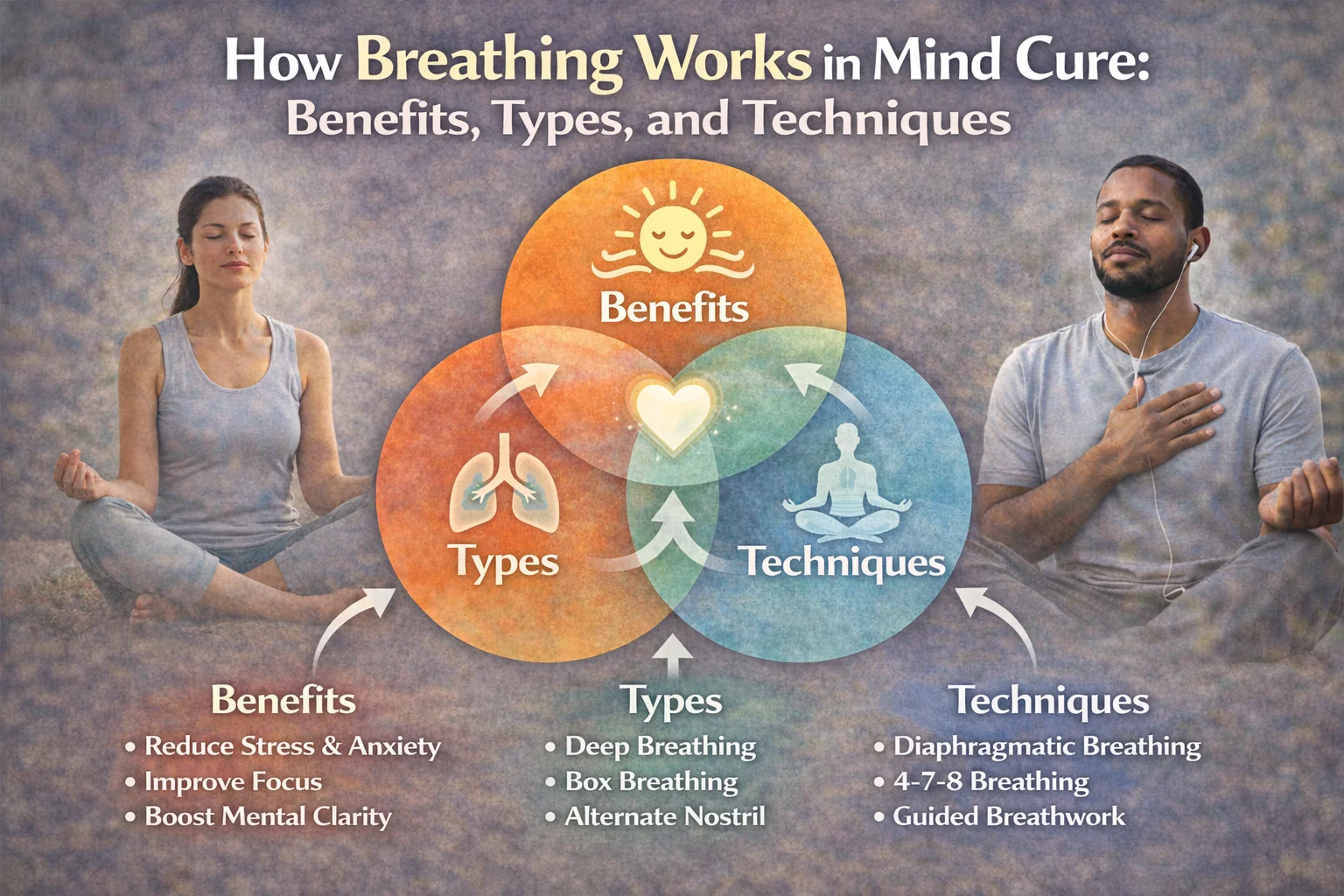
Benefits of Breathing for Mental Health
- Reduces Anxiety: Controlled breathing calms the mind, reducing symptoms of anxiety and panic.
- Improves Focus: Oxygenating the brain enhances concentration and cognitive performance.
- Enhances Emotional Resilience: Regular breathing practice helps manage emotions and builds mental strength.
- Promotes Relaxation: Deep breathing triggers the relaxation response, lowering heart rate and blood pressure.
- Better Sleep: Breathing techniques can improve sleep quality by calming the mind before bed.
Types of Breathing Techniques
- Diaphragmatic Breathing: Also called belly breathing, it involves deep breaths that engage the diaphragm, promoting relaxation.
- Box Breathing: A technique used by athletes and military personnel, involving equal counts of inhaling, holding, exhaling, and holding again.
- Alternate Nostril Breathing: A yogic practice that balances the brain’s hemispheres and calms the mind.
- 4-7-8 Breathing: Inhale for 4 seconds, hold for 7, exhale for 8 to promote instant relaxation.
Common Triggers for Stress and How Breathing Helps
- Work Pressure: Breathing techniques can reset your stress response during high-pressure situations.
- Social Anxiety: Slow breathing reduces nervousness in social settings by calming the body.
- Overthinking: Focusing on breath interrupts repetitive thought patterns, grounding the mind.
- Physical Tension: Breathing relaxes muscles and reduces physical symptoms of stress.
How to Practice Breathing for Mind Cure
- Find a quiet, comfortable space to sit or lie down.
- Start with diaphragmatic breathing: place one hand on your chest and one on your belly, breathing deeply so the belly rises.
- Try box breathing: inhale for 4 seconds, hold for 4, exhale for 4, and hold for 4.
- Practice for 5-10 minutes daily to build a habit.
- Use guided apps or videos to learn new techniques.
- Combine breathing with mindfulness or meditation for enhanced effects.
- Track progress in a journal to notice improvements in mood and stress levels.
Myths About Breathing Techniques
- Myth: Breathing exercises are only for yoga practitioners: Fact: Anyone can benefit from breathing techniques, regardless of experience or beliefs.
- Myth: You need a lot of time to practice: Fact: Even 1-2 minutes of focused breathing can make a difference.
- Myth: Breathing techniques are a cure-all: Fact: While helpful, breathing is a complementary tool and not a substitute for professional care.
Turning Breathing Into a Daily Habit
- Set reminders to practice breathing at specific times, like morning or before bed.
- Pair breathing with daily activities, such as during a commute or break.
- Start with short sessions and gradually increase duration.
- Celebrate small wins, like feeling calmer after a session.
FAQs
How quickly do breathing techniques work?
Some techniques, like 4-7-8 breathing, can provide immediate relaxation, while consistent practice yields long-term benefits.
Can breathing replace therapy for mental health?
Breathing is a powerful tool but should complement, not replace, professional therapy when needed.
Is it normal to feel dizzy when starting breathing exercises?
Mild dizziness can occur due to increased oxygen. Start slowly and consult a doctor if it persists.
Who can benefit from breathing techniques?
Anyone, from beginners to advanced practitioners, can use breathing to improve mental and physical well-being.