How Small Movements Improve Mental Health, Mood, and Motivation
Discover how simple movements like walking, stretching, or light activity can improve mood, reduce anxiety, and increase motivation. Learn the psychology and science behind movement and emotional well-being.
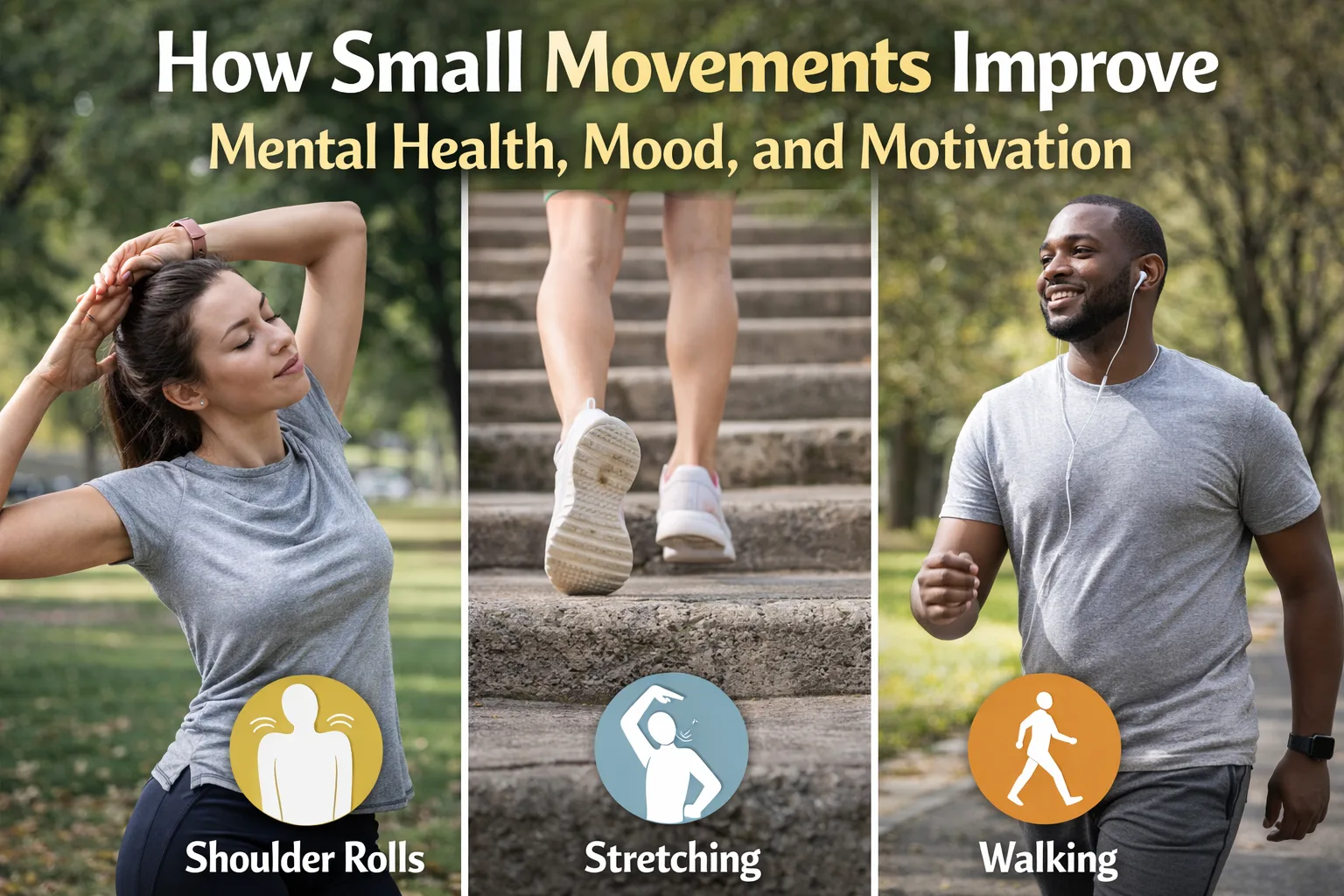
Why Movement Matters for Mental Health
Movement is one of the most natural ways the human body regulates stress and emotional tension. When we move our bodies, even gently, the brain receives signals that help reduce stress and restore balance.
Many people notice that when they feel anxious, overwhelmed, or mentally stuck, their bodies often become still. This lack of movement can increase feelings of fatigue, low motivation, and mental fog.
Introducing even small physical movements can activate the nervous system in a healthy way, helping the mind shift out of stress and into a more balanced emotional state.
How Movement Influences the Brain
Physical activity affects several important brain chemicals that regulate mood and motivation. Movement increases the release of endorphins, dopamine, and serotonin — chemicals associated with emotional well-being.
Endorphins help reduce stress and improve mood. Dopamine supports motivation and focus, while serotonin helps regulate emotions and sleep.
Even brief physical activity such as stretching, walking, or light exercise can stimulate these positive brain responses.
Movement Can Reduce Anxiety and Stress
Anxiety often creates physical tension in the body, including tight muscles, shallow breathing, and restlessness. Gentle movement helps release this physical tension and supports relaxation.
Activities like walking, stretching, or mindful breathing can help calm the nervous system and bring attention back to the present moment.
Combining movement with breathing techniques can be particularly effective in reducing anxiety.
Why Small Movements Are Powerful
Many people believe exercise must be intense or long to improve mental health. However, research suggests that small and consistent movements throughout the day can be equally beneficial.
Short activity breaks help reset mental focus, improve energy levels, and reduce emotional fatigue.
For example, walking for two minutes, stretching after long periods of sitting, or taking a short movement break during work can improve concentration and emotional stability.
Creating a Simple Movement Intention
A movement intention means deciding in advance how you will move your body today. Setting a small and realistic plan increases the chances that you will follow through.
For example, you might say: 'I will walk for five minutes after lunch' or 'I will stretch for two minutes during my break.'
These small commitments help build consistency and encourage healthy habits without overwhelming pressure.
Examples of Simple Daily Movements
- Short Walk: Walking around your room or outside for a few minutes can refresh your mind.
- Gentle Stretching: Stretching your neck, shoulders, and back helps release tension built during the day.
- Shoulder Rolls: Rolling your shoulders slowly can relieve stress and improve posture.
- Light Squats: A few light squats activate muscles and increase circulation.
- Mindful Breathing with Movement: Combining breathing exercises with slow movements can help calm the nervous system.
Building Healthy Movement Habits
The goal is not to perform perfect workouts but to stay consistent with small movements that support well-being.
Starting with just a few minutes of movement can gradually build confidence and motivation.
Over time, these small actions help create healthier routines that support both physical and emotional health.
FAQs
Can small movements really improve mental health?
Yes. Even small movements can activate brain chemicals that improve mood, reduce stress, and increase motivation.
How long should movement activities last?
Even two to five minutes of gentle movement can have positive effects on mood and mental clarity.
What type of movement is best for reducing anxiety?
Gentle activities such as walking, stretching, breathing exercises, and light yoga are often effective for reducing anxiety.
How can I start a daily movement habit?
Start with small intentions such as stretching for two minutes or walking briefly during the day. Consistency matters more than intensity.
Try a Simple Movement Exercise
Start Exercise