Panic Attacks: Symptoms, Causes, Triggers & How to Stop Them
Learn what panic attacks are, their symptoms, triggers, causes, myths, and effective strategies to manage episodes and reduce anxiety in daily life.
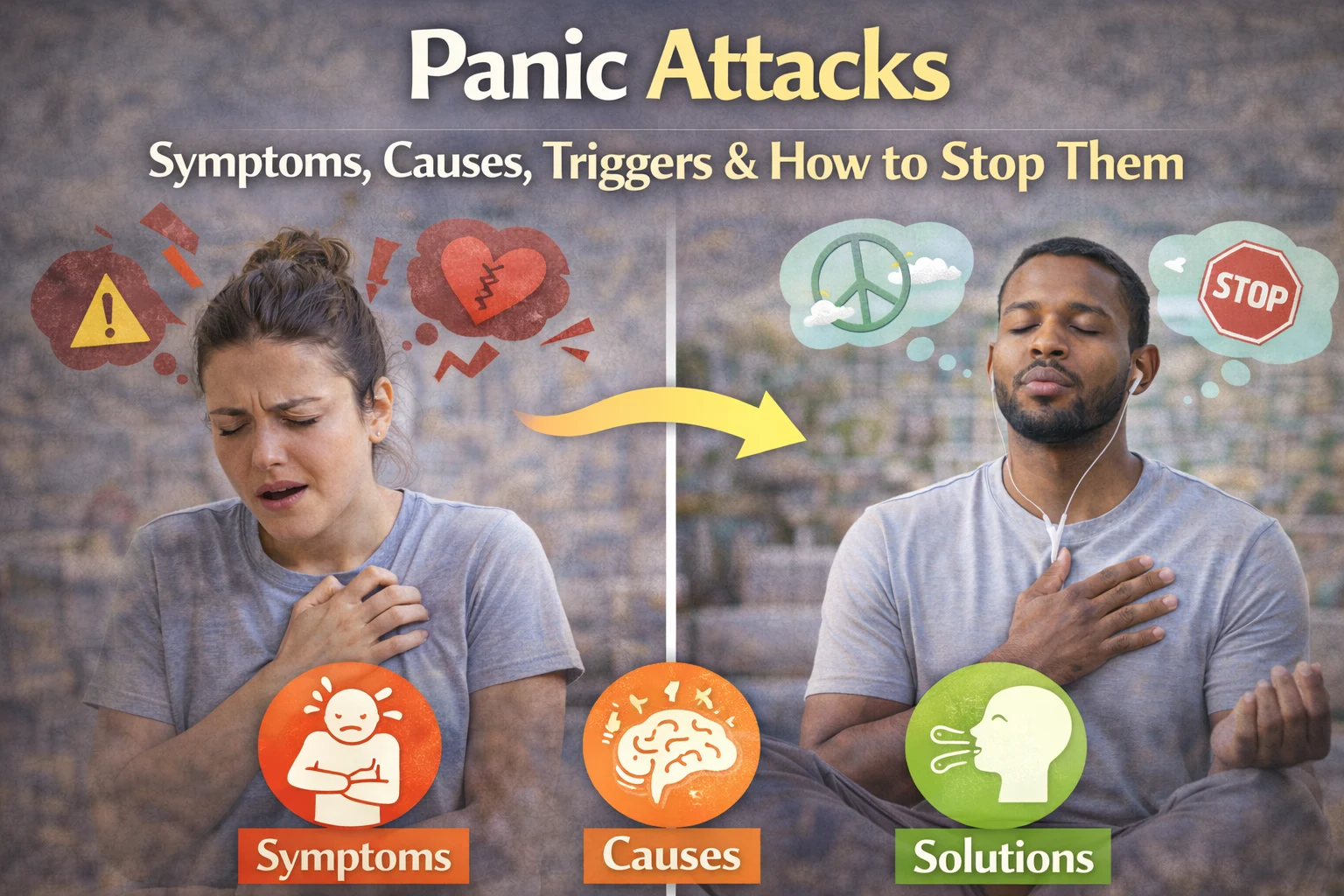
What Are Panic Attacks?
A panic attack is a sudden surge of intense fear or discomfort that peaks within minutes. It can trigger physical and emotional symptoms, even when there is no real danger.
Panic attacks are often unexpected and can be frightening, but they are treatable and manageable with proper strategies.
Causes of Panic Attacks
- Genetic Factors: Family history of anxiety or panic disorders can increase susceptibility.
- Brain Chemistry: Imbalances in neurotransmitters like serotonin and norepinephrine may play a role.
- Stressful Life Events: Major life changes, trauma, or prolonged stress can trigger attacks.
- Medical Conditions: Certain heart, respiratory, or endocrine disorders can contribute.
- Substance Use: Excessive caffeine, alcohol, or drug use may provoke symptoms.
Common Symptoms
- Physical Symptoms: Heart palpitations, shortness of breath, dizziness, sweating, trembling, chest pain, nausea.
- Emotional Symptoms: Intense fear, sense of losing control, feeling detached from reality, overwhelming anxiety.
- Cognitive Symptoms: Fear of dying, catastrophic thinking, feeling like things aren’t real (derealization).
Common Triggers
- Stressful Life Events: Major changes, conflicts, or high-pressure situations.
- Health Concerns: Chronic illness, fatigue, or sleep deprivation can increase vulnerability.
- Environmental Factors: Crowded places, enclosed spaces, or reminders of traumatic experiences.
- Thought Patterns: Catastrophic thinking or high anxiety sensitivity may trigger attacks.
Effects on Daily Life
- Behavioral: Avoidance of certain situations, reduced social interactions, decreased productivity.
- Emotional: Heightened anxiety, fear of future attacks, low confidence, irritability.
- Physical: Fatigue, muscle tension, sleep disturbances, frequent headaches.
Healthy Ways to Manage Panic Attacks
- Learn and practice deep breathing and relaxation techniques to calm the nervous system.
- Engage in regular physical activity like walking, yoga, or light exercise.
- Use grounding techniques to stay connected to the present moment.
- Talk to supportive friends, family, or mental health professionals.
- Identify triggers and develop coping strategies to reduce anxiety.
- Consider therapy or counseling if attacks are frequent or severe.
- Maintain a healthy lifestyle: sleep well, eat balanced meals, and limit caffeine or alcohol.
Myths About Panic Attacks
- Myth: Panic attacks are dangerous: Fact: While frightening, panic attacks are not physically dangerous.
- Myth: You can’t do anything about them: Fact: With therapy, coping strategies, and sometimes medication, attacks can be managed.
- Myth: Only anxious people get panic attacks: Fact: Panic attacks can happen to anyone, even those without an anxiety disorder.
Long-Term Management
- Learn cognitive-behavioral techniques to reframe anxious thoughts.
- Keep a journal to track triggers, patterns, and progress.
- Practice mindfulness meditation regularly to reduce overall anxiety.
- Seek professional guidance if attacks are frequent or interfering with life.
- Develop a support network of friends, family, or support groups.
FAQs
Are panic attacks dangerous?
Panic attacks are not physically dangerous, but they can be distressing. With coping strategies and treatment, they are manageable.
How can I prevent panic attacks?
Identifying triggers, practicing relaxation, regular exercise, and therapy can help reduce the frequency and intensity.
When should I seek professional help?
If panic attacks are frequent, severe, or affecting your daily life, a mental health professional can provide guidance and treatment options.
Can children have panic attacks?
Yes, children and adolescents can experience panic attacks, and early guidance from parents and professionals is beneficial.