Understanding Your Thoughts | How to Manage Negative Thinking & Overthinking
Discover how thoughts shape your reality, learn about common thinking patterns, challenges, and practical strategies to nurture a healthier mindset.
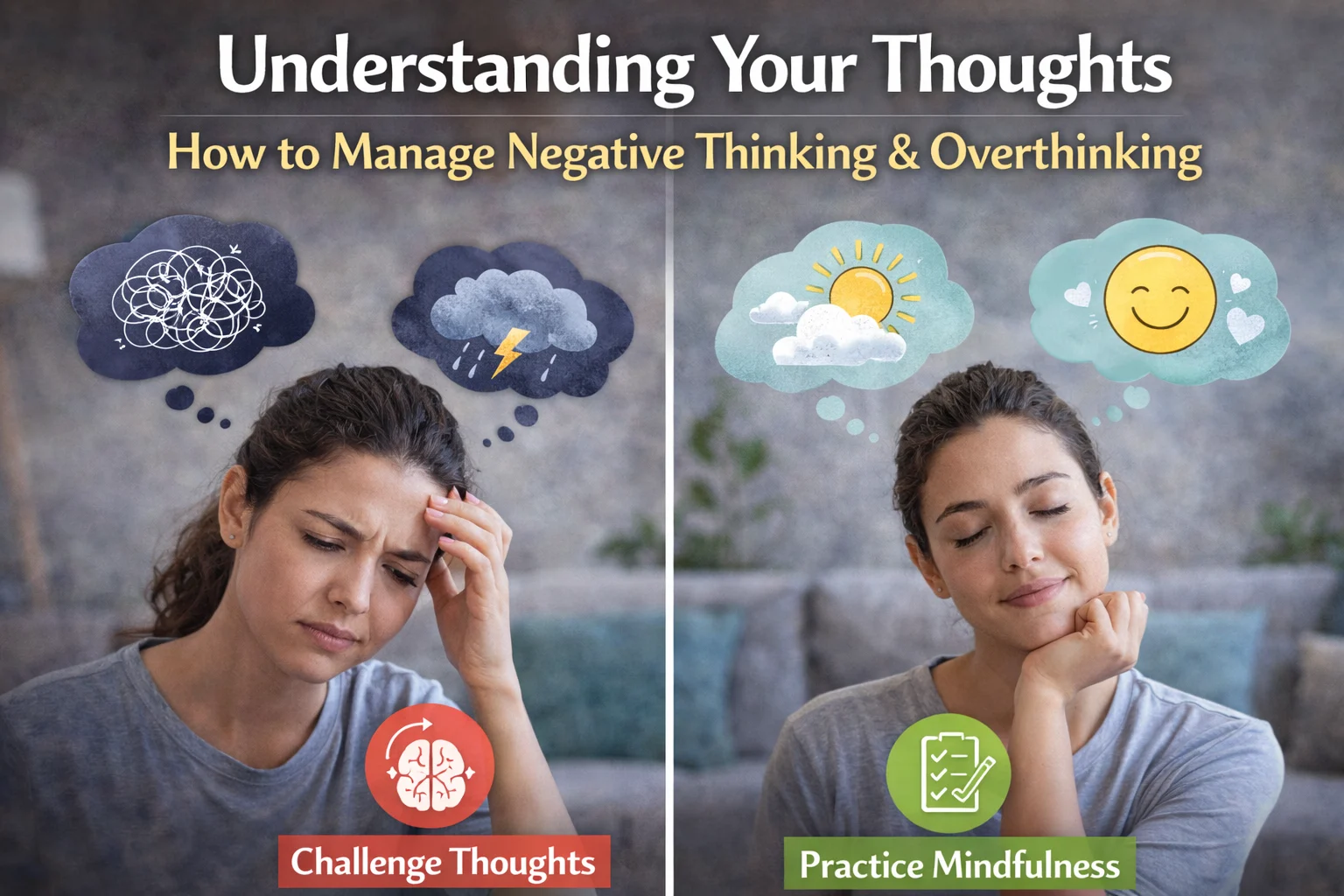
What Are Thoughts?
Thoughts are the mental images, words, and ideas that flow through your mind every day. They influence how you perceive yourself, others, and the world around you.
Healthy thinking patterns can encourage motivation, positivity, and growth, while negative or repetitive thoughts can create stress and self-doubt.
Types of Thoughts
- Positive Thoughts: Encouraging ideas that boost confidence and resilience.
- Negative Thoughts: Self-critical or pessimistic ideas that lower self-esteem.
- Neutral Thoughts: Everyday mental chatter that passes without strong emotion.
- Intrusive Thoughts: Unwanted, repetitive ideas that may cause distress.
Common Thought Challenges
- Overthinking: Going in circles with the same idea without resolution.
- Racing Thoughts: Experiencing rapid, overwhelming mental activity.
- Negative Self-Talk: Harsh inner dialogue that fuels insecurity.
- Cognitive Distortions: Inaccurate thought patterns such as exaggeration or black-and-white thinking.
Ways to Improve Your Thinking
- Challenge unhelpful thoughts by asking if they’re realistic.
- Practice journaling to clarify and release mental clutter.
- Use mindfulness to stay present and reduce rumination.
- Focus on gratitude by writing down daily positives.
- Talk with a professional if thoughts feel overwhelming.
FAQs
Why are thoughts important?
Thoughts guide your emotions, actions, and overall mental health. They play a key role in shaping daily experiences.
Can I control my thoughts?
You cannot fully stop thoughts from appearing, but you can learn to manage how you react and redirect them into healthier patterns.
What helps with negative thinking?
Practices like reframing, mindfulness, and gratitude exercises can reduce the impact of negative thinking.