What Is Fear? Psychology, Types & How to Overcome It
Explore what fear is, why we experience it, its biological role, different types, common triggers, myths, and healthy ways to cope. Learn practical techniques to transform fear into strength and resilience.
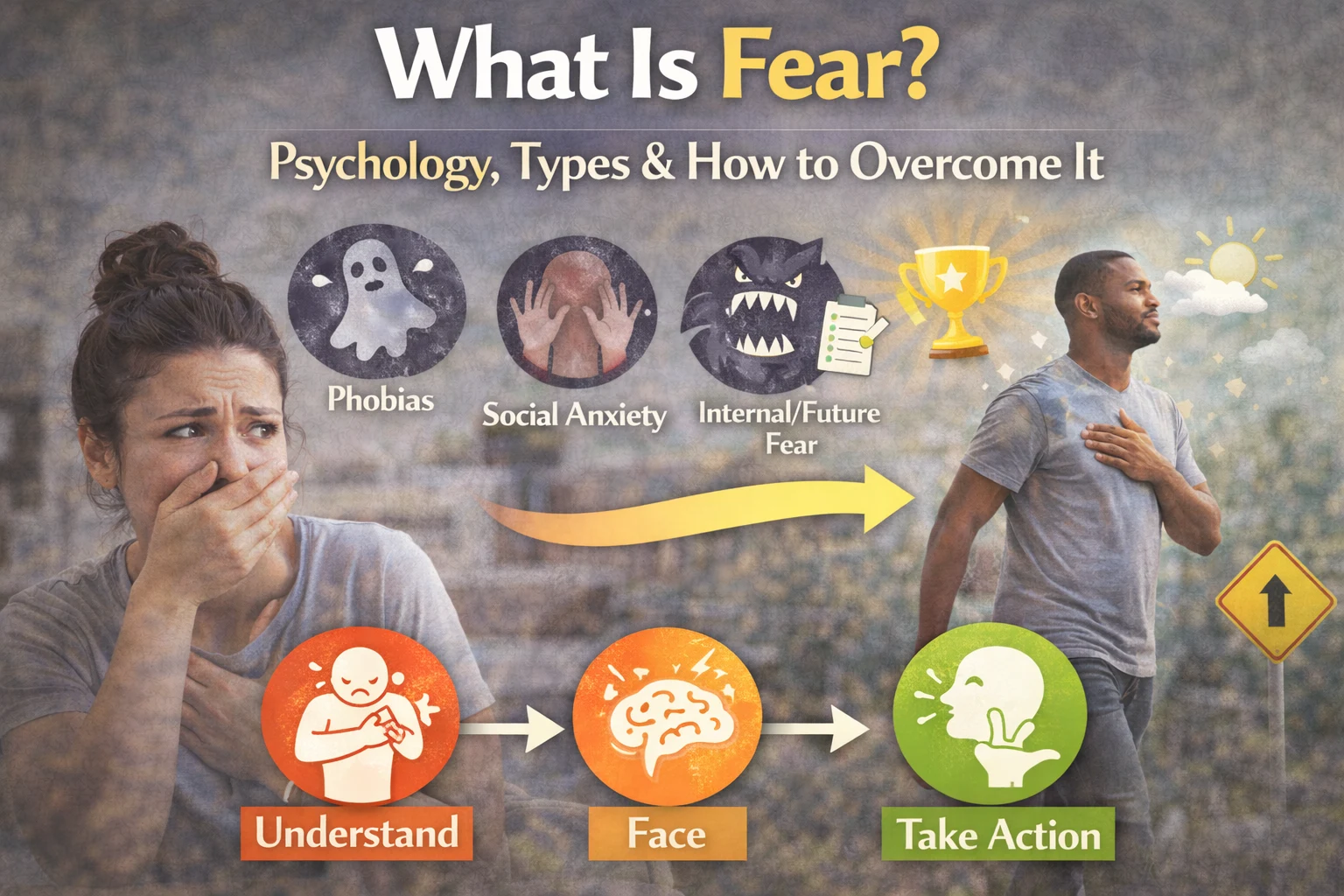
What Is Fear?
Fear is a natural emotional response to a perceived threat or danger. It activates our survival system and prepares the body to respond through the 'fight, flight, or freeze' reaction.
While fear can protect us in real threats, it can also arise in situations where the danger is exaggerated or imagined.
The Science Behind Fear
- Brain’s Role: The amygdala, part of the brain’s limbic system, quickly detects threats and triggers fear responses.
- Body Response: Fear releases stress hormones like adrenaline, increasing heart rate, muscle tension, and alertness.
- Survival Function: Fear evolved as a protective mechanism to help humans and animals escape danger and stay alive.
Types of Fear
- Realistic Fear: Occurs when facing genuine danger, such as standing near the edge of a cliff.
- Phobias: Intense and often irrational fears related to specific objects or situations, such as spiders or heights.
- Social Fear: Fear of rejection, judgment, or embarrassment in social settings.
- Existential Fear: Deep fears about life, death, purpose, or the unknown future.
Common Triggers of Fear
- Uncertainty: Fear often arises when outcomes are unknown or unpredictable.
- Past Trauma: Negative or painful experiences can create long-lasting fear patterns.
- Learned Behavior: Children may develop fears by observing parents or peers.
- Biological Sensitivity: Some people are naturally more sensitive to fear due to genetics or temperament.
Impact of Fear on Daily Life
- Emotional: Persistent fear may lead to stress, anxiety, or low self-confidence.
- Behavioral: Avoiding situations, procrastination, or difficulty making decisions.
- Physical: Muscle tension, sleep disturbances, digestive problems, and fatigue.
Healthy Ways to Manage Fear
- Practice deep breathing and grounding techniques during fearful moments.
- Challenge fearful thoughts with rational thinking and evidence.
- Gradually expose yourself to fears in small, manageable steps.
- Engage in regular exercise and mindfulness meditation.
- Seek support from trusted friends, family, or professionals.
- Keep a fear journal to track patterns and identify triggers.
- Consider therapy or counseling if fear is persistent or overwhelming.
Myths About Fear
- Myth: Fear is a weakness: Fact: Fear is a natural survival response and does not indicate weakness.
- Myth: Strong people don’t feel fear: Fact: Everyone experiences fear; resilience comes from managing it, not avoiding it.
- Myth: Fear always means danger: Fact: Many fears are exaggerated or imagined and not linked to real threats.
Turning Fear Into Strength
- Reframe fear as a signal for growth and learning opportunities.
- Use fear to sharpen focus and build resilience.
- Set small challenges that gradually expand your comfort zone.
- Celebrate progress when facing fears, no matter how small.
FAQs
Is fear always bad?
No, fear can protect us from danger. However, when it becomes excessive or irrational, it may interfere with daily life.
What’s the difference between fear and anxiety?
Fear is a response to a specific, immediate threat, while anxiety is a prolonged state of worry about potential future threats.
Can fear be completely eliminated?
Fear cannot be entirely removed, as it is a natural human emotion. However, it can be managed and reduced with practice.
When should I seek professional help for fear?
If fear is persistent, irrational, or severely limiting your daily activities, consulting a mental health professional is recommended.