What Is Self-Awareness? Benefits, Examples & Development
Learn what self-awareness is, its benefits, techniques to develop it, and how it influences personal growth, relationships, and emotional intelligence.
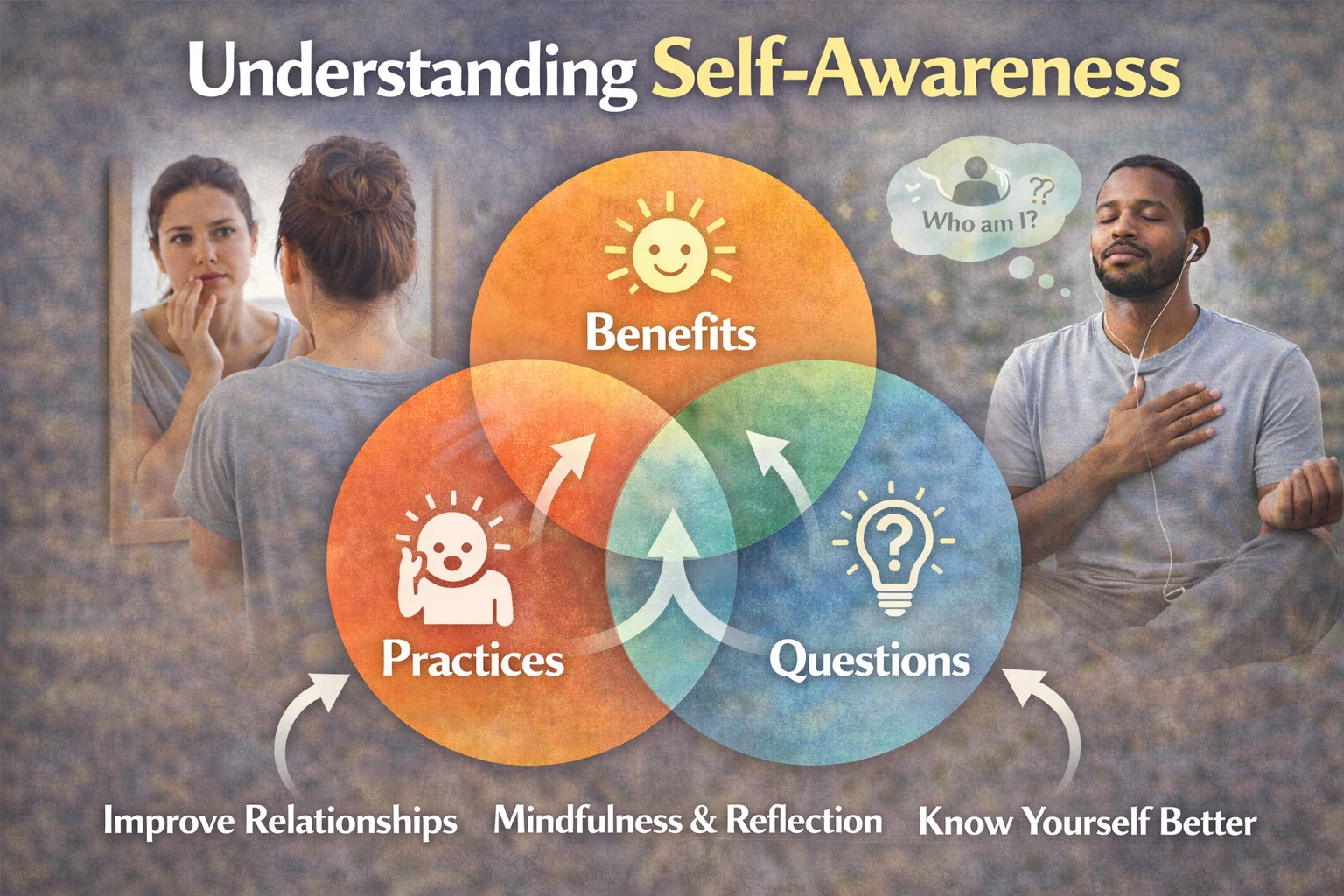
What is Self-Awareness?
Self-awareness is the ability to observe and understand your own thoughts, emotions, behaviors, and their impact on yourself and others.
It is a core element of emotional intelligence and helps individuals make conscious choices instead of reacting automatically.
Developing self-awareness allows you to identify strengths, weaknesses, values, and beliefs, leading to more intentional living.
Benefits of Self-Awareness
- Improved Decision-Making: Being aware of your values and emotions helps you make better choices.
- Emotional Regulation: Recognizing your emotional triggers allows for calmer, more balanced responses.
- Stronger Relationships: Understanding yourself improves empathy, communication, and trust with others.
- Personal Growth: Awareness of strengths and weaknesses supports continuous learning and development.
- Resilience: Increases ability to adapt to challenges and handle stress effectively.
Techniques to Develop Self-Awareness
- Mindful Reflection: Pause during the day to notice your thoughts, feelings, and reactions.
- Journaling: Writing daily reflections helps identify patterns and emotions.
- Feedback from Others: Seeking honest input from trusted people can reveal blind spots.
- Meditation: Focusing inward increases awareness of thoughts and emotions.
- Personality Assessments: Tools like MBTI or Enneagram provide insights into behavior and tendencies.
- Active Listening: Paying attention to how you respond in conversations increases relational awareness.
Challenges in Building Self-Awareness
- Biases: We often see ourselves through filters of habit or emotion, making objectivity difficult.
- Discomfort: Confronting weaknesses or mistakes can feel uncomfortable but is essential for growth.
- Consistency: Self-awareness requires ongoing effort and reflection, not a one-time exercise.
- Blind Spots: We all have behaviors or tendencies that we can’t easily see without feedback.
Integrating Self-Awareness into Daily Life
Start the day by setting an intention and noticing your emotional state.
Pause before reacting in stressful situations and ask yourself why you feel that way.
Reflect each evening on what went well, what challenged you, and how you responded.
Use mindfulness, journaling, or meditation as daily tools for ongoing self-awareness.
Practice gratitude to shift focus toward positive aspects of yourself and your life.
FAQs
Why is self-awareness important?
Self-awareness helps you understand yourself better, improve emotional regulation, strengthen relationships, and grow personally and professionally.
How do I know if I am self-aware?
Signs include recognizing your emotions, understanding how your actions affect others, and being open to feedback.
Can self-awareness be learned?
Yes, self-awareness is a skill that can be developed through reflection, feedback, mindfulness, and consistent practice.
Does self-awareness improve leadership?
Absolutely. Leaders with high self-awareness make better decisions, build trust, and inspire teams more effectively.
Is self-awareness the same as mindfulness?
Not exactly. Mindfulness is about present-moment awareness, while self-awareness includes understanding your emotions, values, and behaviors in a broader sense.