Signs of Burnout: 15 Early Warning Signs and Clinical Recovery Pathways
Are you exhausted or burned out? Read a clinical psychologist's guide to the 15 early warning signs of chronic occupational and emotional burnout, and practical recovery steps.
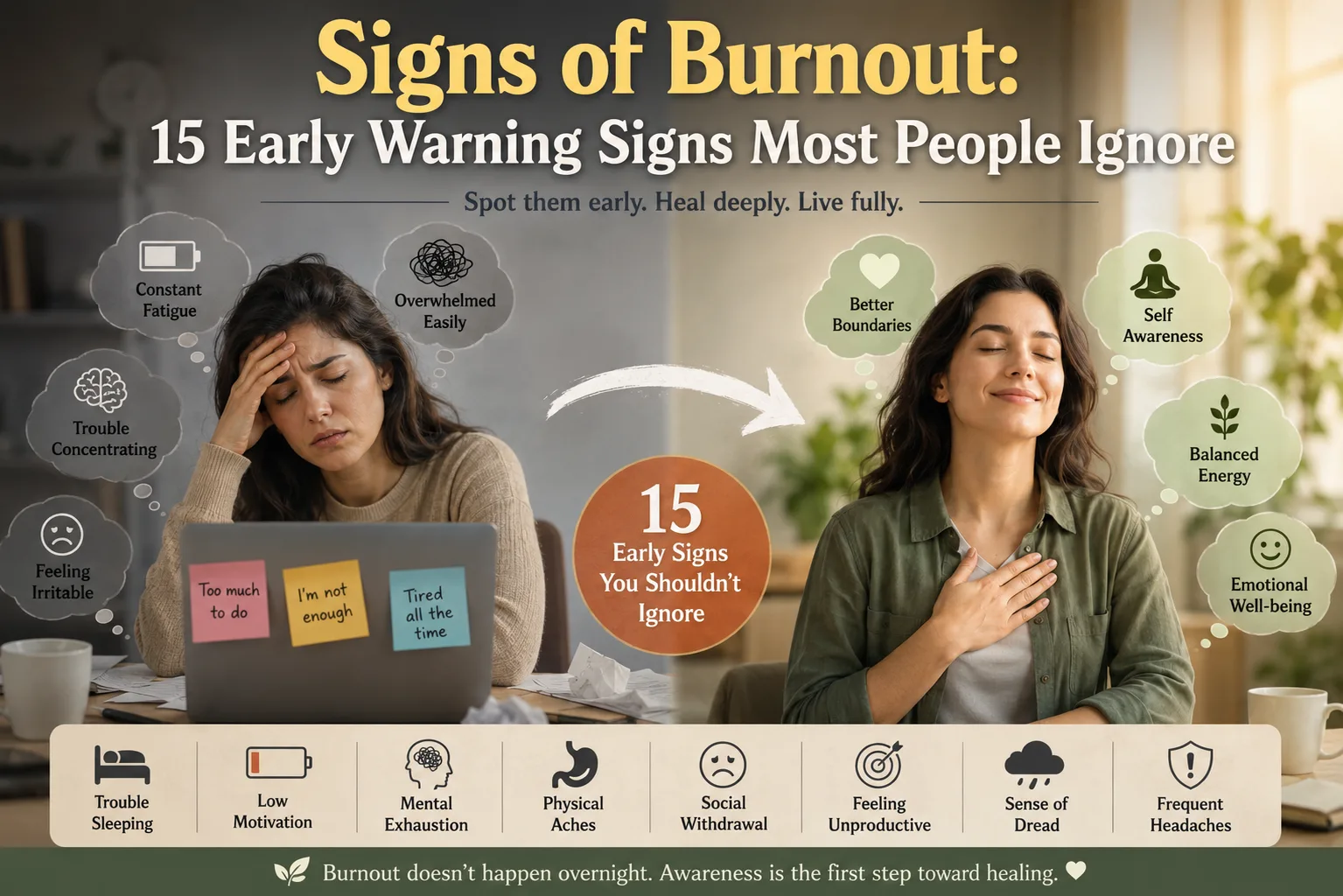
Understanding Burnout: Stress vs. Systemic Depletion
In my years of clinical practice, the single biggest mistake I see people make is treating burnout as 'severe stress.' It isn't. Stress is an over-engagement of your nervous system—it involves too much urgency, too much emotion, and a hyperactive drive. Burnout, conversely, is a state of systemic depletion. It is characterized by disengagement, blunted emotions, and a profound sense of helplessness.
When you are stressed, you feel like if you could just get everything under control, you’d be fine. When you are burned out, you look at your life and simply see an empty well. It is a slow, insidious erosion of your psychological and physical reserves that accumulates over months or even years of unmanaged chronic pressure.
Recognizing the earliest somatic and behavioral markers is critical. By the time you can no longer get out of bed, your nervous system has already been operating in an unsustainable survival state for far too long.
The 15 Hidden Signs of Burnout Most People Overlook
- ✦ Revenge Bedtime ProcrastinationReclaiming your late-night hours for aimless scrolling or TV because it feels like the only part of the day where you actually possess your own life, sacrificing vital sleep in the process.
- ✦ The 'Compassion Fatigue' ShiftNoticing a quiet, unsettling numbness or lack of empathy toward clients, colleagues, friends, or family members whose needs used to move you deeply.
- ✦ Unexplained Micro-Somatic AilmentsFrequent tension headaches, a persistent knot in your stomach, tight shoulders, or a highly reactive digestive system that flares up despite clean eating habits.
- ✦ Slower Cognitive ReboundFinding that tasks which used to take twenty minutes now take an hour, coupled with a distinct 'brain fog' where organizing simple thoughts feels like wading through wet cement.
- ✦ Emotional Cynicism and DevaluationDeveloping a cynical, pessimistic inner monologue about your career, your relationships, or your long-term goals, often dismissing your own achievements as meaningless.
- ✦ Hyper-Vigilant IrritabilitySnapping disproportionately over small inconveniences, like a dropped pen, an unread email, or a minor schedule change, because your emotional bandwidth is entirely tapped out.
- ✦ The Weekend Decompression CollapseSpending your entire weekend purely trying to cognitively and physically survive, rendering you completely unable to participate in hobbies, social life, or restorative joy.
- ✦ Social Disconnection and WithdrawalLetting texts pile up unanswered, avoiding social interactions, and retreating into isolation because interacting with anyone feels like an overwhelming demand on your energy.
- ✦ Altered Sleep ArchitecturesWaking up consistently at 3:00 AM or 4:00 AM with a racing mind, or sleeping for nine hours yet waking up feeling deeply unrefreshed, heavy, and structurally exhausted.
- ✦ Compulsive Micro-EscapismAn increased reliance on substances, comfort eating, video games, or shopping to artificially self-soothe your overstimulated nervous system throughout the day.
- ✦ Chronic Imposter Syndrome FlaresSuddenly feeling like a fraud or doubting your foundational professional capabilities, because your current exhaustion prevents you from performing at your usual benchmark.
- ✦ Neglecting Your Baseline Hygiene of SelfSilently dropping your core wellness anchors—skipping workouts, choosing processed takeout, forgetting to hydrate, or entirely dropping mindfulness routines.
- ✦ A Loss of Future-Oriented VisionAn inability to look forward to events, vacations, or milestones. The horizon of your life shrinks to simply getting through the next 12 hours.
- ✦ An Inner Sense of Hollow AchievementFinishing a major project or hitting a goal and feeling absolutely nothing—no pride, no relief, just a cold sense of dread regarding the next obligation.
- ✦ Persistent Low-Grade VulnerabilityFeeling structurally fragile, catching every seasonal cold, or feeling like you are constantly on the precipice of tears or an outburst without a direct, immediate cause.
The Core Psychological Triggers Behind Chronic Exhaustion
- ✦ The Erosion of AutonomyWorking or living in an environment where you feel you have zero control over your schedule, tasks, outcomes, or boundaries.
- ✦ Chronic Reward-Effort MismatchPouring profound psychological or physical labor into something without receiving fair financial, emotional, or institutional validation.
- ✦ The 'Always-On' Digital BurdenThe psychological weight of hyper-connectivity, where push notifications and emails constantly infringe on non-work spaces.
- ✦ Perfectionistic Coping MechanismsTying your core human self-worth entirely to your productivity and output, making rest feel like a failure rather than a physiological need.
A Clinical Framework for Reversing Burnout
- 1Audit your current boundaries and ruthlessly identify your primary non-negotiable personal spaces.
- 2Shift from passive escape (scrolling, drinking) to active physiological restoration (somatic movement, stillness, time in nature).
- 3Re-anchor your nervous system by implementing micro-breaks of pure silence between meetings or tasks.
- 4Engage in radical radical transparency with an objective third party, therapist, or counselor regarding your structural load.
- 5Disconnect entirely from occupational communications during your off-hours—create an immutable digital sunset.
- 6Dismantle perfectionistic self-talk by replacing performance demands with compassionate, realistic self-assessments.
A Note from the Clinical Desk on Nervous System Restoration
If you read through this list and found yourself ticking off more boxes than you care to admit, please breathe out. You have not broken yourself. Your nervous system is simply doing exactly what it was evolved to do: it is forcing a shutdown because the conditions you are living in are structurally unviable.
Burnout recovery is not an intellectual exercise; it is an organic, physiological re-patterning that requires time, immense self-compassion, and structural adjustments to your daily life. Healing begins the moment you stop gaslighting your own exhaustion.
Frequently Asked Clinical Questions About Burnout
Q: How can I tell the difference between standard depression and burnout?
While they overlap, burnout is context-specific. It is predominantly tied to your environment, workload, or systemic caretaking roles. If you remove someone from a toxic work environment and their joy returns, it's likely burnout. Depression, however, tends to cast a pervasive shadow across all aspects of life, regardless of environment.
Q: Can taking a one-week vacation cure my burnout?
No. A vacation will offer brief symptomatic relief, but if you return to the exact same boundaries, workloads, and relational dynamics, your nervous system will slide back into exhaustion within 48 hours. Real recovery requires a structural change in how you manage your day-to-day energy.
Q: Why do I feel anxious when I finally try to rest?
When your nervous system is trapped in a chronic fight-or-flight cycle, slowing down feels unsafe to the body. This is called 'relaxation anxiety.' Your mind invents things to worry about because it doesn't know how to exist without adrenaline. It takes practice to safely teach your body to settle.
Ready to rebuild your structural peace?
Access clinical grounding tools curated by experts.