Sleep Hygiene Tips: A Comprehensive Guide to Better Sleep
Discover how sleep hygiene can transform your rest, boost mental health, and enhance daily performance. Learn the science of sleep, practical tips for all scenarios, common sleep disruptors, and techniques to create a sleep-friendly routine.
What Is Sleep Hygiene?
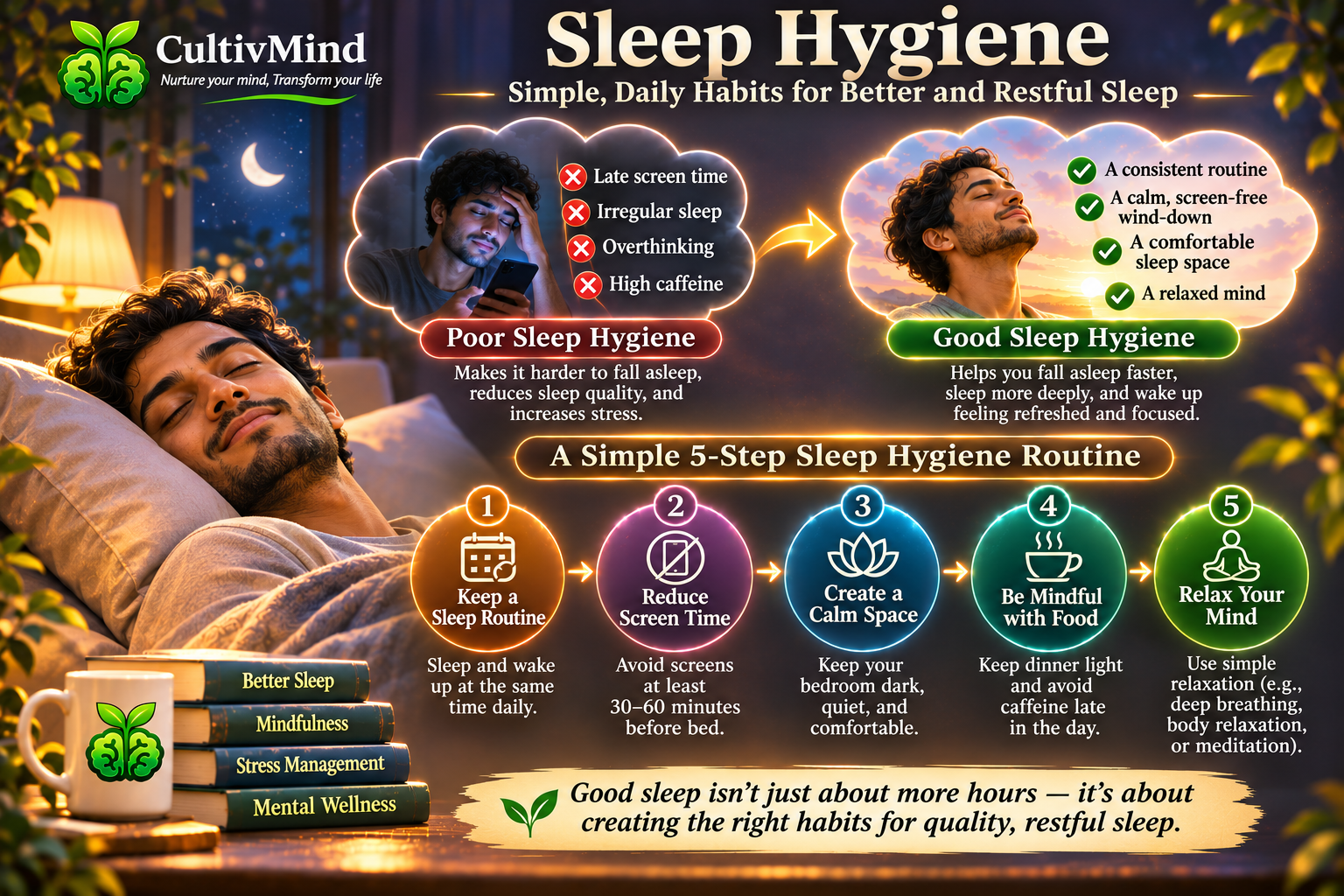
Sleep hygiene refers to habits, routines, and environmental factors that promote restful, high-quality sleep. It involves creating an optimal sleep environment and adopting behaviors that support the body’s natural sleep-wake cycle.
Good sleep hygiene is essential for mental clarity, emotional stability, physical health, and overall well-being. Poor sleep hygiene can lead to fatigue, mood swings, and reduced cognitive function.
The Science Behind Sleep and the Brain
- •Circadian Rhythm: The body’s internal clock regulates sleep and wakefulness, influenced by light, temperature, and daily routines.
- •Sleep Stages: Sleep cycles through non-REM (light and deep sleep) and REM (dreaming) stages, essential for memory consolidation and emotional processing.
- •Hormonal Balance: Melatonin promotes sleep, while cortisol and adrenaline, triggered by stress, can disrupt it.
- •Brain Health: Sleep clears toxins from the brain, supports learning, and reduces the risk of cognitive decline.
Benefits of Good Sleep Hygiene
- •Improved Mood: Quality sleep reduces irritability, anxiety, and depressive symptoms.
- •Enhanced Focus: Well-rested brains perform better in tasks requiring attention and problem-solving.
- •Better Physical Health: Sleep supports immune function, heart health, and metabolism.
- •Increased Resilience: Good sleep helps you cope with stress and emotional challenges.
- •Sharper Memory: Sleep strengthens neural connections, improving learning and recall.
Common Sleep Disruptors Across Scenarios
- •Stress and Anxiety: Overthinking or worry can keep the mind active, preventing relaxation.
- •Irregular Schedules: Shift work, travel, or inconsistent bedtimes disrupt the circadian rhythm.
- •Screen Time: Blue light from phones, tablets, or computers suppresses melatonin production.
- •Poor Diet: Caffeine, alcohol, or heavy meals close to bedtime can interfere with sleep.
- •Medical Conditions: Insomnia, sleep apnea, or chronic pain can hinder restful sleep.
- •Environmental Factors: Noise, light, or uncomfortable bedding can disrupt sleep quality.
Sleep Hygiene Tips for All Scenarios
General Tips for Everyone
- •Maintain a consistent sleep schedule, even on weekends, to stabilize your circadian rhythm.
- •Create a relaxing bedtime routine, such as reading or meditating, to signal sleep time.
- •Limit screen time 1-2 hours before bed or use blue light filters.
- •Keep your bedroom dark, quiet, and cool (ideal temperature: 60-67°F or 15-20°C).
- •Use comfortable bedding and a supportive mattress suited to your sleep position.
For Stress and Anxiety
- •Practice deep breathing or progressive muscle relaxation before bed, as outlined in your breathing blog.
- •Journal about worries or gratitude to clear your mind, as discussed in your journaling blog.
- •Try calming teas like chamomile or valerian root (consult a doctor if on medication).
For Shift Workers or Irregular Schedules
- •Use blackout curtains or a sleep mask to block light during daytime sleep.
- •Establish a mini-routine before sleep, regardless of the time of day.
- •Limit caffeine 6-8 hours before your intended sleep time.
For Parents or Caregivers
- •Nap when your child or loved one naps to catch up on sleep.
- •Create a shared family sleep routine to align schedules.
- •Use white noise machines to block disruptive sounds.
For Students or Busy Professionals
- •Avoid all-nighters; prioritize sleep to boost productivity and memory.
- •Schedule short naps (20-30 minutes) to recharge without disrupting nighttime sleep.
- •Use a planner or journaling to manage stress and organize tasks.
For Medical or Chronic Conditions
- •Consult a healthcare provider for conditions like insomnia, sleep apnea, or restless leg syndrome.
- •Follow a consistent sleep routine to support medical treatments.
- •Explore cognitive behavioral therapy for insomnia (CBT-I) if recommended.
Diet and Sleep: What to Eat and Avoid
- •Sleep-Promoting Foods: Incorporate foods like almonds, kiwi, or turkey, which contain melatonin or tryptophan, as mentioned in your food blog.
- •Avoid Caffeine: Limit coffee, tea, or energy drinks 6-8 hours before bed.
- •Light Evening Meals: Eat dinner 2-3 hours before bed to avoid digestive discomfort.
- •Limit Alcohol: Alcohol may induce sleep but disrupts REM sleep, reducing rest quality.
- •Stay Hydrated: Drink water throughout the day but reduce intake before bed to avoid nighttime bathroom trips.
Myths About Sleep Hygiene
- •Myth: You can catch up on sleep on weekends: Fact: Irregular sleep patterns disrupt your circadian rhythm, making consistent sleep more effective.
- •Myth: Alcohol helps you sleep better: Fact: Alcohol reduces sleep quality by disrupting REM sleep.
- •Myth: Everyone needs 8 hours of sleep: Fact: Sleep needs vary; most adults need 7-9 hours, but some function well on slightly less or more.
Building a Sleep-Friendly Routine
- Set a fixed bedtime and wake-up time, adjusting gradually if needed.
- Create a pre-sleep ritual: dim lights, avoid screens, and engage in calming activities.
- Invest in quality bedding and consider earplugs or white noise machines.
- Track sleep patterns in a journal to identify what improves or disrupts your rest.
- Limit naps to 20-30 minutes and avoid napping late in the day.
- Get natural sunlight exposure during the day to regulate your circadian rhythm.
FAQs
Frequently Asked Questions
How long does it take to improve sleep with hygiene practices?
Some changes, like a consistent bedtime, can improve sleep within days, but full benefits may take 2-4 weeks of consistent practice.
Can sleep hygiene help with insomnia?
Yes, sleep hygiene can improve mild insomnia, but chronic insomnia may require professional help, such as CBT-I or medical evaluation.
Is it okay to use my phone in bed if I use a blue light filter?
Blue light filters help, but mental stimulation from phones can still disrupt sleep. It’s best to avoid screens 1-2 hours before bed.
What if I can’t fall asleep despite good sleep hygiene?
If sleep difficulties persist for over a month, consult a doctor to rule out underlying conditions like sleep apnea or anxiety disorders.
Can diet really affect sleep quality?
Yes, foods rich in melatonin or tryptophan promote sleep, while caffeine or heavy meals can disrupt it, as discussed in your food blog.
Ready to put this into practice?
Follow a structured guided plan to strengthen your mental wellness habits.
Continue Reading & Exploring
Insomnia Symptoms & Natural Treatments: How to Restore Restful Sleep
Tossing and turning with a hyperactive mind destroys daytime vitality. Discover circadian alignment, stimulus control, and gentle cognitive wind-downs.
Anxiety: Symptoms, Causes, Types & Proven Management
Anxiety is an anticipatory state of uneasiness where the nervous system stays on high alert. Learn the symptoms, causes, and clinical tools to calm your mind.
Panic Attacks: Symptoms, Causes, Triggers & How to Stop Them
A panic attack is a sudden surge of intense fear and physical alarm. Understand why it happens and how to de-escalate acute panic in minutes.