Insomnia Symptoms, Causes & Treatment: How to Improve Sleep Naturally
Discover what insomnia is, its types, symptoms, causes, challenges, and effective ways to improve sleep quality. Explore practical tips, healthy lifestyle habits, relaxation methods, and professional treatments for better rest and overall well-being.
What is Insomnia?
Insomnia is a common sleep disorder where a person finds it difficult to fall asleep, stay asleep, or achieve restorative sleep. It often leads to tiredness, low energy, and poor concentration during the day.
It can be temporary (lasting a few days or weeks) or chronic (lasting months or years). Both can affect mental and physical health if left unmanaged.
Sleep plays a vital role in healing, memory, mood balance, and immunity. Understanding insomnia helps in identifying the right approach to restoring healthy sleep patterns.
Common Symptoms of Insomnia
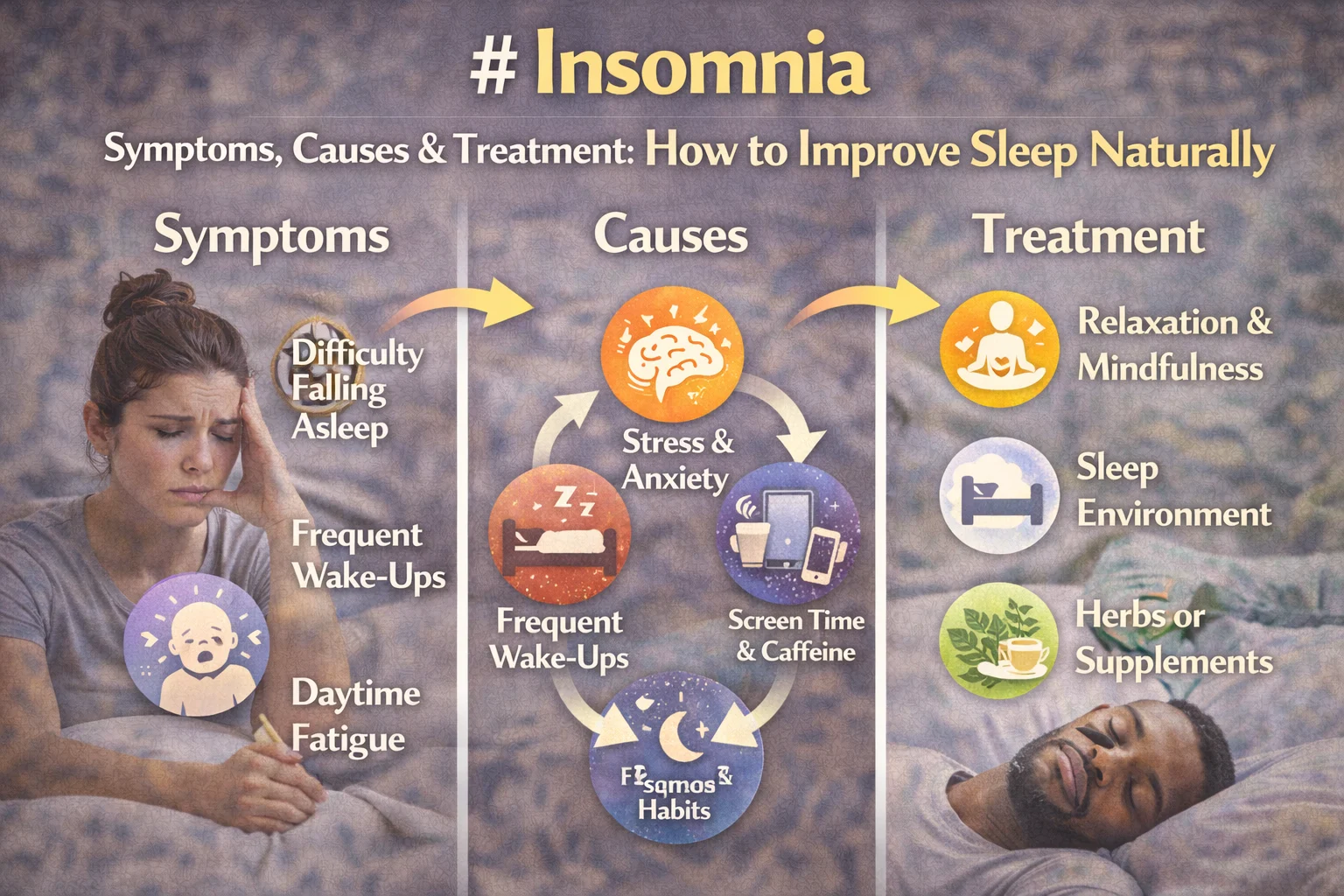
- Difficulty Falling Asleep: Taking more than 30 minutes to drift into sleep most nights.
- Frequent Night Awakenings: Waking up multiple times at night with trouble going back to sleep.
- Early Morning Awakening: Waking too early and being unable to resume sleep.
- Non-Restorative Sleep: Feeling unrefreshed even after hours of sleep.
- Daytime Impairment: Drowsiness, irritability, poor concentration, memory issues, or increased risk of mistakes at work or driving.
Causes and Triggers of Insomnia
- Psychological Factors: Stress, anxiety, or depression are leading contributors to persistent sleep problems.
- Lifestyle Choices: Irregular bedtime, excessive screen time, or late consumption of caffeine and alcohol.
- Medical Conditions: Chronic pain, asthma, arthritis, gastrointestinal reflux, or neurological conditions.
- Environmental Factors: Noisy, uncomfortable, or excessively bright sleeping environments.
- Medications: Drugs for asthma, depression, blood pressure, or stimulants may interfere with sleep.
- Hormonal or Biological Changes: Shift work, pregnancy, or aging-related changes in melatonin production.
Types of Insomnia
- Acute Insomnia: Short-term, often triggered by stress, travel, or life events. Usually resolves once the stressor is managed.
- Chronic Insomnia: Long-term sleep difficulties lasting 3 months or more, occurring at least 3 nights a week.
- Onset Insomnia: Difficulty initiating sleep at night.
- Maintenance Insomnia: Trouble staying asleep, waking up frequently, or tossing and turning.
- Behavioral Insomnia of Childhood: Common in children due to poor bedtime routines, lack of limits, or separation anxiety.
Ways to Manage Insomnia
- Set a consistent bedtime and wake-up schedule to train your body’s internal clock.
- Keep your bedroom dark, cool, and quiet for a sleep-friendly environment.
- Avoid stimulating activities like work, gaming, or phone scrolling in bed.
- Limit naps during the day, especially in the late afternoon or evening.
- Use relaxation techniques such as progressive muscle relaxation, yoga, or mindfulness meditation.
- Get exposure to natural daylight during the morning to regulate your circadian rhythm.
- Exercise regularly, but avoid intense activity right before bed.
- Avoid clock-watching at night—hide or turn away your alarm clock.
- Seek medical guidance or therapy (like CBT-I: Cognitive Behavioral Therapy for Insomnia) if self-care does not help.
Healthy Lifestyle Tips for Better Sleep
Small but consistent daily habits can transform sleep quality. A proper routine signals the brain that it is time to wind down.
Create a relaxing pre-bedtime ritual such as light reading, a warm bath, or aromatherapy with calming scents like lavender.
Keep a sleep diary to track sleep patterns, triggers, and improvements. This can also help healthcare professionals in diagnosis.
Limit blue light exposure by using ‘night mode’ on devices or wearing blue-light-blocking glasses in the evening.
Avoid lying in bed awake for long periods. If you can’t sleep within 20 minutes, get up and do a calming activity until you feel sleepy again.
FAQs
Is insomnia common?
Yes. Around 1 in 3 people experience insomnia symptoms at some point, and about 10% may suffer from chronic insomnia.
Can insomnia be cured?
Yes, many people recover from insomnia by improving sleep habits, reducing stress, and treating underlying conditions. In some cases, therapy or short-term medication may be required.
What should I avoid if I have insomnia?
Avoid stimulants like coffee, tea, and energy drinks in the evening. Also, limit alcohol, nicotine, heavy meals, and screen use before bed.
When should I see a doctor for insomnia?
If poor sleep continues for more than 3 weeks, interferes with daily life, or causes severe fatigue, professional help is strongly recommended.
Does lack of sleep affect health?
Yes. Chronic insomnia is linked to weakened immunity, heart disease, diabetes, depression, and reduced life expectancy.
Is medication safe for treating insomnia?
Short-term sleep medicines may help, but they are not a long-term solution. Doctors usually recommend behavioral therapy and lifestyle changes first.