What Is Meditation? Benefits, Types & Beginner's Step-by-Step Guide
Learn what meditation is, its science-backed physiological benefits, 6 core styles (Mindfulness, Vipassana, Metta), and an actionable 5-minute beginner practice.
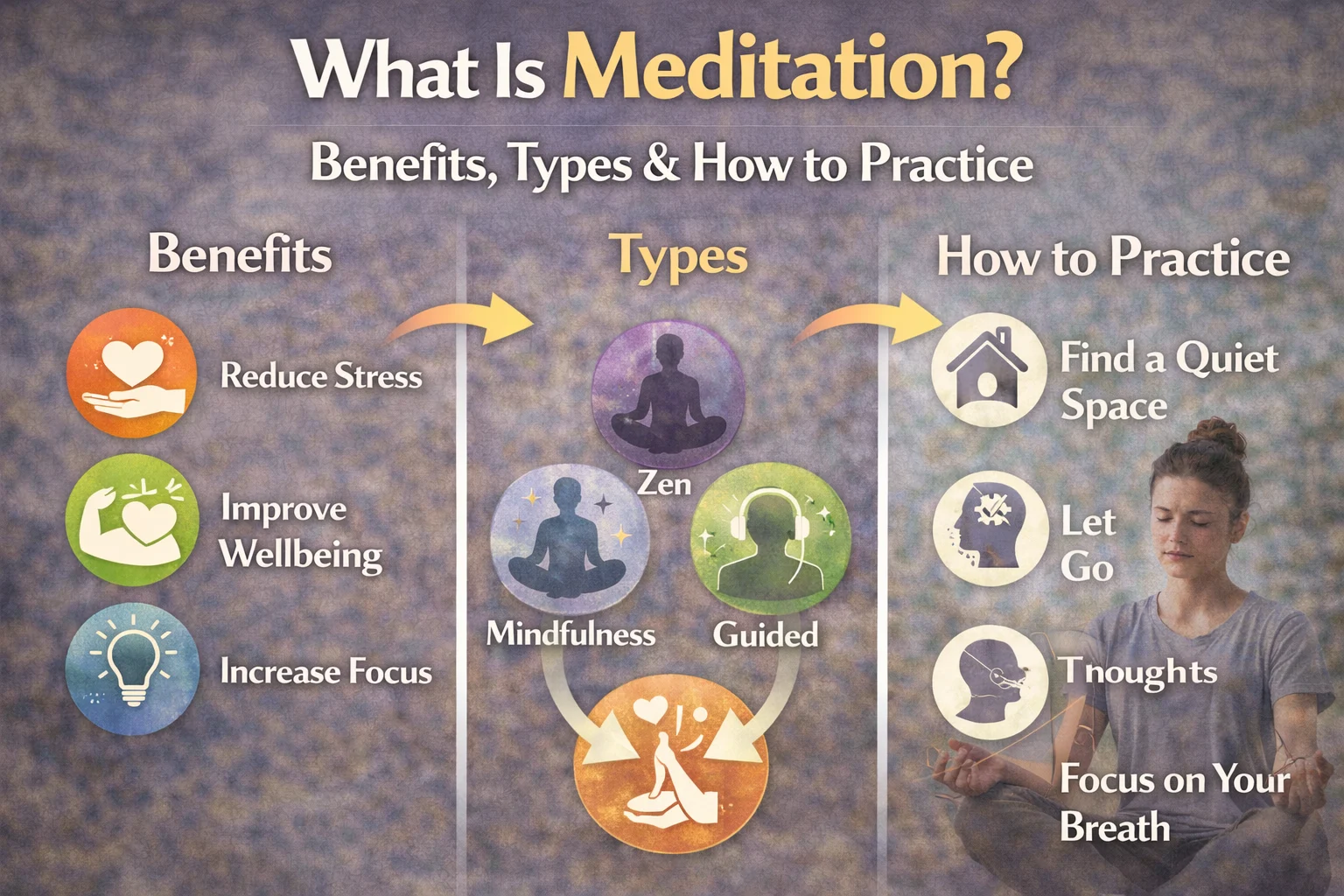
What is Meditation? (The Neuroscience of Presence)
Meditation is a contemplative practice that involves cultivating present-moment awareness, calming the nervous system, and observing thoughts without immediate reactivity.
Practiced for millennia across diverse cultures, modern clinical research increasingly utilizes mindfulness and meditation protocols for stress reduction, cognitive clarity, and emotional regulation.
Whether practiced through quiet breath observation or structured body scans, the foundational intention remains consistent: fostering mental stillness, cognitive flexibility, and inner resilience.
Science-Backed Benefits for Brain and Body
- Stress Hormone Regulation: Clinical studies indicate regular contemplative practices can help lower subjective distress and attenuate elevated cortisol levels.
- Attentional Control: Sustained practice strengthens fronto-parietal attention networks, improving working memory and focus.
- Emotional Regulation: Supports down-regulation of amygdala reactivity, promoting greater emotional stability and calm.
- Restorative Sleep Architecture: Helps calm sympathetic nervous system arousal, easing the physiological transition into restorative rest.
- Cardiovascular & Somatic Balance: Evidence suggests regular mindfulness sessions may assist in blood pressure management and reducing somatic tension.
6 Major Styles of Meditation Explained
- Mindfulness Meditation: Focusing on the present moment by observing thoughts, sensations, and breath without judgment.
- Transcendental Meditation: Using a mantra or sound to reach a deep state of relaxation and awareness.
- Guided Meditation: Following spoken instructions, often with visualizations or calming imagery.
- Loving-Kindness Meditation (Metta): Cultivating compassion and positive emotions toward yourself and others.
- Body Scan Meditation: Paying attention to each part of the body to release tension and improve awareness.
- Movement Meditation: Gentle, mindful movement practices like yoga, tai chi, or walking meditation.
Step-by-Step Beginner's Practice Guide (5-Minute Technique)
- Find a quiet and comfortable space to sit or lie down.
- Close your eyes and take a few deep breaths to relax.
- Choose a focus—such as your breath, a mantra, or a visual image.
- When your mind wanders, gently bring your attention back without judgment.
- Start with short sessions (5–10 minutes) and gradually increase the duration.
- Practice regularly to build consistency and long-term benefits.
Overcoming Common Meditation Challenges
- Restless Mind: It’s natural for thoughts to arise—acknowledge them and return to your focus.
- Impatience: Expecting instant results can cause frustration; meditation is a gradual process.
- Discomfort: Physical unease while sitting can be reduced with cushions or adjusting posture.
- Sleepiness: Meditation should be relaxing but not drowsy; practice when alert.
- Consistency: Finding time daily can be challenging, but even short sessions help.
Integrating Mindful Awareness into Daily Life
Meditation doesn’t have to be limited to a formal session. Short mindful pauses during daily activities can also count.
Take a few deep breaths before meetings, while commuting, or during stressful moments to center yourself.
Use guided apps or recordings to help maintain a routine and explore different meditation styles.
With consistency, meditation can improve resilience, patience, and clarity in everyday life.
FAQs
How long should I meditate each day?
Even 5–10 minutes daily can bring benefits. Over time, increasing to 20 minutes or more enhances the practice.
Do I need to sit cross-legged to meditate?
No. You can sit on a chair, lie down, or even practice while walking. Comfort is more important than posture.
Can meditation replace sleep?
No. Meditation can improve sleep quality but cannot substitute for proper rest.
Is meditation religious?
While meditation has spiritual origins, modern meditation is secular and widely practiced for health and wellness.
Can children and beginners practice meditation?
Yes. Meditation is suitable for all ages, and beginners can start with short, guided sessions to make it easier.