What Is Mindfulness? Benefits, Techniques & How to Practice It
Learn what mindfulness is, its benefits, practices, and challenges. Discover practical strategies to stay present, reduce stress, and improve mental clarity and overall well-being.
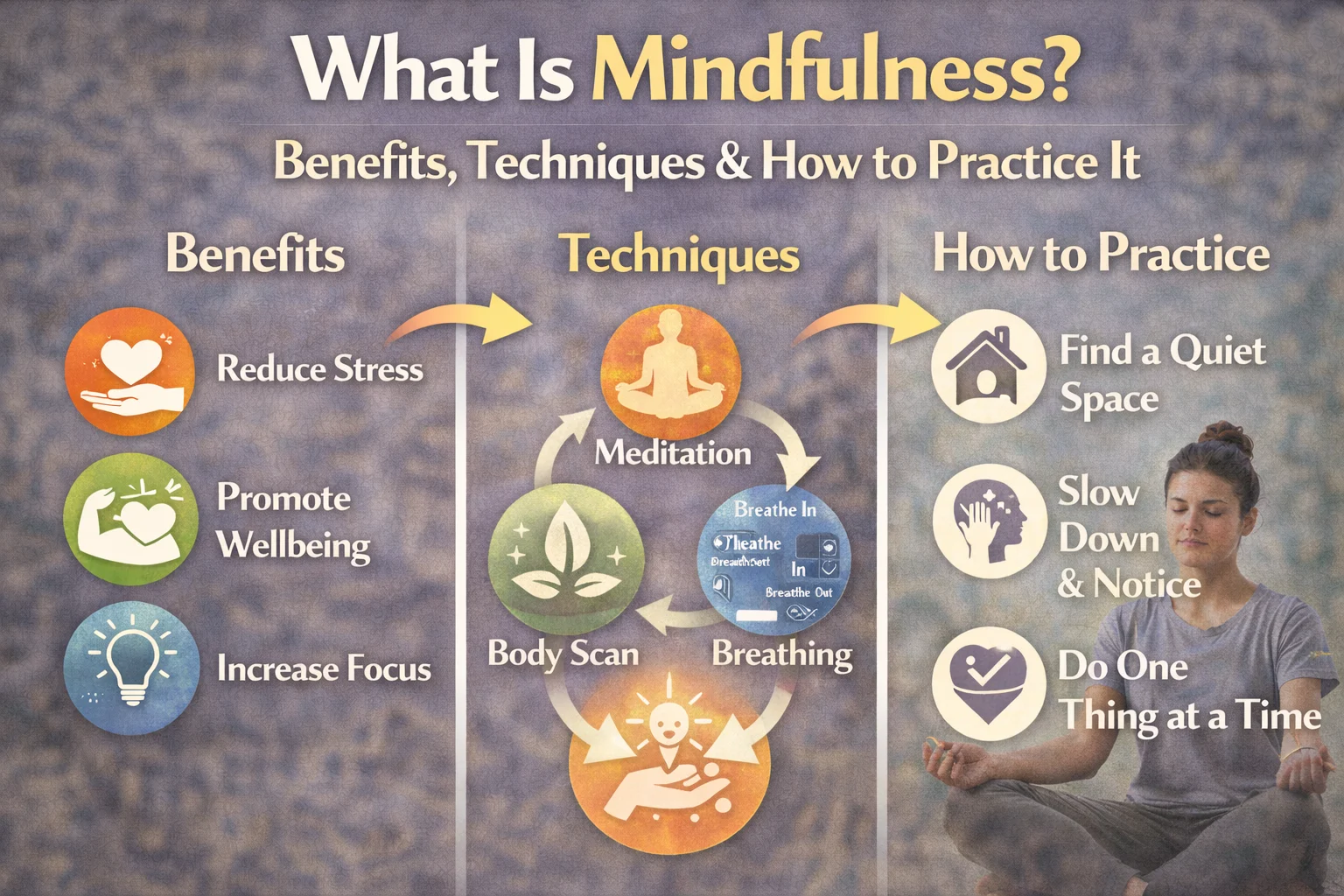
What is Mindfulness?
Mindfulness is the practice of being fully present in the moment without judgment. It means paying attention to thoughts, emotions, and surroundings with acceptance.
It is not about stopping thoughts, but rather noticing them and gently bringing attention back to the present.
Practicing mindfulness regularly can reduce stress, improve focus, and enhance overall emotional balance.
Key Benefits of Mindfulness
- Stress Reduction: Mindfulness lowers cortisol levels and helps manage anxiety and pressure.
- Improved Focus: Training the mind to return to the present enhances concentration and memory.
- Emotional Balance: Helps regulate emotions, reducing reactivity and improving relationships.
- Better Physical Health: Linked to lower blood pressure, improved immunity, and reduced chronic pain.
- Enhanced Self-Awareness: Encourages deeper understanding of thoughts, habits, and behavioral patterns.
Common Myths about Mindfulness
- Myth 1: Mindfulness is about emptying your mind. In reality, it’s about observing thoughts without attachment.
- Myth 2: You need hours of meditation daily. Just a few minutes of practice can bring benefits.
- Myth 3: It’s only for spiritual people. Mindfulness is for everyone, regardless of beliefs.
- Myth 4: Mindfulness guarantees instant calm. It is a skill that improves gradually with practice.
Mindfulness Practices
- Mindful Breathing – Focus on the natural rhythm of your breath, gently redirecting your mind when it wanders.
- Body Scan Meditation – Bring awareness to different parts of your body to release tension.
- Mindful Eating – Notice the taste, texture, and aroma of each bite without distractions.
- Walking Meditation – Pay attention to each step, the ground beneath, and your surroundings.
- Gratitude Practice – Reflect daily on things you are thankful for to shift focus toward positivity.
- Mindful Journaling – Write about your thoughts and experiences without judgment.
- Five Senses Exercise – Use sight, sound, touch, taste, and smell to ground yourself in the present moment.
Challenges in Practicing Mindfulness
- Restless Mind: Thoughts may wander often, but that is natural—gently bring focus back.
- Impatience: Expecting quick results can lead to frustration. Consistency is key.
- Discomfort: Becoming aware of emotions can feel uncomfortable at first, but it helps in long-term healing.
- Time Constraints: Even short practices (2–5 minutes) daily can be beneficial.
- Distractions: Phones, noise, and multitasking can interfere; creating a calm space helps.
Integrating Mindfulness into Daily Life
Mindfulness is not limited to meditation. It can be practiced anytime, anywhere.
During routine tasks—like washing dishes, brushing teeth, or commuting—focus on the activity itself without multitasking.
Start small with mindful pauses during the day, such as taking three slow breaths before responding to emails or conversations.
Over time, these small practices train the brain to respond calmly rather than react impulsively.
FAQs
Do I need to meditate to practice mindfulness?
No. Meditation is one way to practice mindfulness, but you can also integrate it into everyday activities like eating, walking, or listening.
How long should I practice mindfulness daily?
Even 5–10 minutes a day can make a difference. With consistency, benefits grow over time.
Can mindfulness help with anxiety and stress?
Yes. Research shows mindfulness reduces stress and anxiety by helping people regulate emotions and stay present rather than worrying about the future.
Is mindfulness a religious practice?
While mindfulness has roots in Buddhist traditions, modern mindfulness is a secular practice accessible to everyone.
Can children practice mindfulness?
Yes. Mindfulness can help children improve focus, manage emotions, and reduce stress, especially when introduced through simple breathing or awareness exercises.