How Journaling Helps Your Mind: Benefits, Techniques, and Tips
Discover how journaling can improve mental health, reduce stress, and enhance self-awareness. Learn the science behind journaling, explore different techniques, and get practical tips to start your journaling journey for a healthier mind.
What Is Journaling?
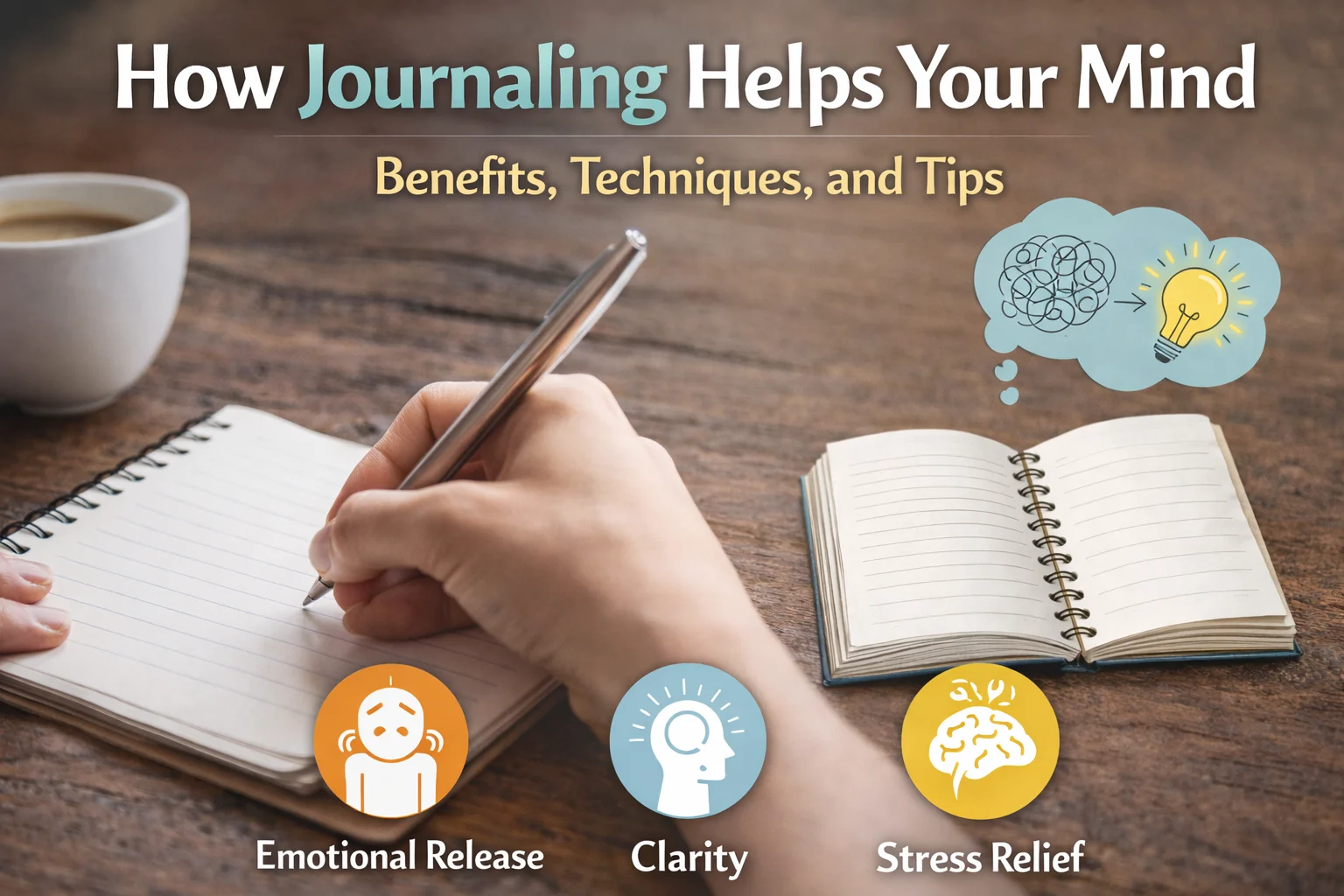
Journaling is the practice of writing down thoughts, feelings, experiences, or goals, often in a structured or freeform way. It’s a powerful tool for self-reflection, emotional processing, and personal growth.
Unlike casual note-taking, journaling encourages deeper introspection, helping you understand your emotions, track patterns, and set intentions for mental well-being.
The Science Behind Journaling and Mental Health
- Emotional Regulation: Writing about emotions activates the prefrontal cortex, helping you process and manage feelings effectively.
- Stress Reduction: Expressive writing lowers cortisol levels, reducing stress and anxiety.
- Cognitive Clarity: Journaling organizes thoughts, improving decision-making and problem-solving skills.
- Memory Enhancement: Writing reinforces neural pathways, aiding memory retention and recall.
Benefits of Journaling for Your Mind
- Reduces Anxiety: Writing about worries can help release them, calming the mind.
- Boosts Self-Awareness: Journaling helps identify thought patterns, triggers, and emotional responses.
- Improves Mood: Reflecting on positive experiences or gratitude enhances emotional well-being.
- Enhances Creativity: Freeform journaling encourages creative thinking and problem-solving.
- Supports Goal Setting: Writing down goals clarifies intentions and tracks progress.
Types of Journaling Techniques
- Gratitude Journaling: Write daily about things you’re thankful for to foster positivity.
- Reflective Journaling: Reflect on daily experiences or emotions to gain insight, like tracking fear triggers as mentioned in your fear blog.
- Bullet Journaling: Use lists and trackers to organize tasks, habits, and goals in a structured format.
- Stream-of-Consciousness Journaling: Write freely without editing to release unfiltered thoughts and emotions.
- Prompt-Based Journaling: Use specific questions or prompts (e.g., 'What made me smile today?') to guide reflection.
Common Triggers Journaling Can Address
- Stress and Overwhelm: Journaling helps process overwhelming emotions and prioritize tasks.
- Anxiety or Worry: Writing about fears or uncertainties can reduce their intensity, similar to the fear journal in your blog.
- Low Mood: Gratitude or reflective journaling can shift focus to positive aspects of life.
- Decision Fatigue: Journaling clarifies options and pros/cons, aiding decision-making.
How to Start Journaling for Mental Health
- Choose a medium: a notebook, digital app, or computer based on your preference.
- Set aside 5-10 minutes daily in a quiet, comfortable space.
- Start with a simple prompt, like 'What am I feeling right now?' or 'What’s one thing I’m grateful for?'
- Write freely without worrying about grammar or structure.
- Try gratitude journaling by listing three things you’re thankful for each day.
- Track progress, such as mood changes or stress levels, to identify patterns.
- Experiment with different techniques (e.g., bullet or reflective journaling) to find what works best.
- Be consistent but flexible—journaling a few times a week is still beneficial.
Myths About Journaling
- Myth: Journaling requires perfect writing skills: Fact: Journaling is about self-expression, not polished writing.
- Myth: You need hours to journal effectively: Fact: Even 5 minutes of focused writing can provide mental health benefits.
- Myth: Journaling is only for negative emotions: Fact: Journaling can capture positive moments, goals, and gratitude too.
Turning Journaling Into a Daily Habit
- Pair journaling with an existing habit, like morning coffee or bedtime routine.
- Keep your journal visible to serve as a reminder.
- Start small with short entries to avoid feeling overwhelmed.
- Review past entries weekly to reflect on progress and insights.
- Celebrate milestones, like completing a month of consistent journaling.
FAQs
Is journaling the same as gratitude practice?
No, journaling is a broader practice of writing thoughts or experiences, while gratitude journaling specifically focuses on writing about things you’re thankful for to boost positivity.
How long does it take to see benefits from journaling?
Some benefits, like reduced stress, can be felt immediately, while deeper insights or mood improvements may take weeks of regular practice.
Do I need a physical journal to practice journaling?
No, you can journal digitally using apps, notes, or even voice recordings, depending on what suits you.
Can journaling help with anxiety?
Yes, writing about anxious thoughts can help process and reduce their intensity, often by identifying triggers and reframing perspectives.