How to Stop Worrying: Causes, Psychology & Practical Solutions
Learn what worry is, why it happens, its psychological and physical impact, common triggers, myths, and practical strategies to manage it. Discover how to transform worry into problem-solving and resilience.
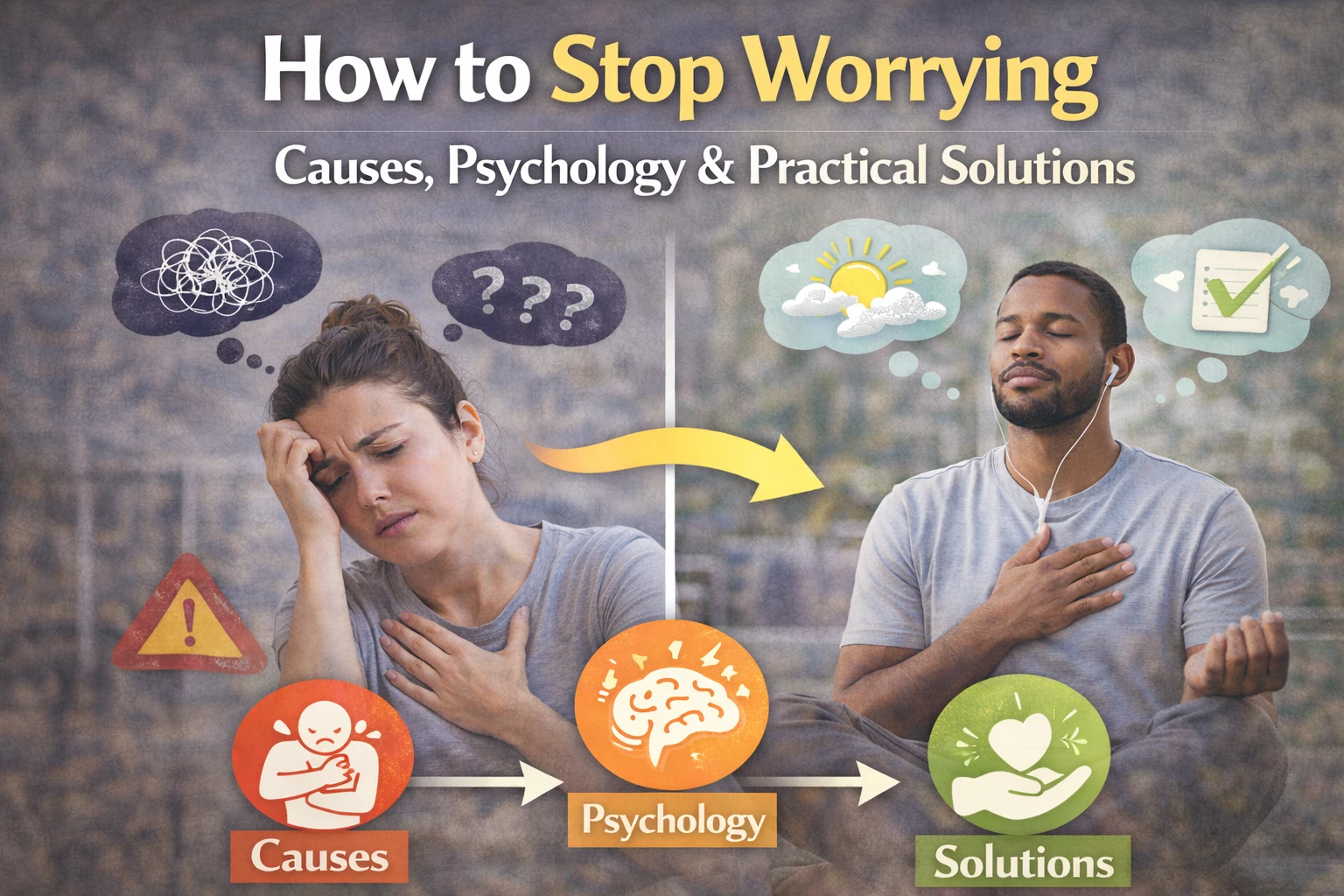
What Is Worry?
Worry is a chain of negative thoughts and emotions about potential future problems or threats.
It often involves overthinking scenarios that may never happen, leading to stress and restlessness.
The Psychology of Worry
- Thought Loops: Worry tends to cycle through the same problems repeatedly without resolution.
- Perceived Control: Worry often gives an illusion of control but rarely leads to effective solutions.
- Mental Strain: Excessive worry taxes attention, memory, and decision-making.
Types of Worry
- Everyday Worry: Concerns about routine matters like work, money, or health.
- Chronic Worry: Persistent and overwhelming worry that interferes with daily life.
- Health-Related Worry: Fear of illness, symptoms, or medical outcomes.
- Social Worry: Concerns about relationships, judgment, or acceptance by others.
Common Triggers of Worry
- Uncertainty: Not knowing what will happen often fuels worry.
- Past Experiences: Negative events can condition the mind to expect bad outcomes.
- Perfectionism: High standards and fear of mistakes can lead to constant worry.
- Information Overload: Constant exposure to stressful news or social media amplifies worry.
Impact of Worry on Daily Life
- Emotional: Can lead to anxiety, irritability, or low confidence.
- Behavioral: Procrastination, avoidance, or excessive checking behaviors.
- Physical: Muscle tension, fatigue, headaches, and sleep problems.
Healthy Ways to Manage Worry
- Set aside a 'worry time' each day to limit overthinking.
- Practice mindfulness and grounding exercises to stay in the present.
- Write worries in a journal to externalize and reduce mental load.
- Challenge negative thoughts by asking for evidence and alternatives.
- Break down big problems into smaller, manageable steps.
- Limit exposure to stressful information and media.
- Seek therapy or professional help if worry becomes excessive.
Myths About Worry
- Myth: Worrying prevents bad things: Fact: Worrying does not prevent outcomes; it only drains energy.
- Myth: Only weak people worry: Fact: Everyone worries; it’s a human experience, not weakness.
- Myth: Worrying shows responsibility: Fact: Responsibility is shown through action, not excessive worrying.
Turning Worry Into Strength
- Reframe worry as a sign of care and concern that can guide problem-solving.
- Use worry as motivation to prepare realistic plans.
- Build tolerance for uncertainty instead of avoiding it.
- Celebrate progress in reducing unnecessary worry.
FAQs
Is worry normal?
Yes, worry is a natural response to uncertainty or potential problems. It becomes harmful only when excessive.
How is worry different from anxiety?
Worry focuses on specific thoughts or concerns, while anxiety is a broader state of unease with physical symptoms.
Can worry ever be helpful?
Yes, moderate worry can encourage preparation and caution. The problem arises when it becomes chronic.
When should I seek help for worry?
If worry is constant, overwhelming, or interfering with sleep, work, or relationships, professional support is recommended.