Progressive Muscle Relaxation: Release Tension and Calm Your Mind
Learn how Progressive Muscle Relaxation (PMR) helps you release physical tension, reduce anxiety, and improve sleep through step-by-step muscle awareness.
What Is Progressive Muscle Relaxation?
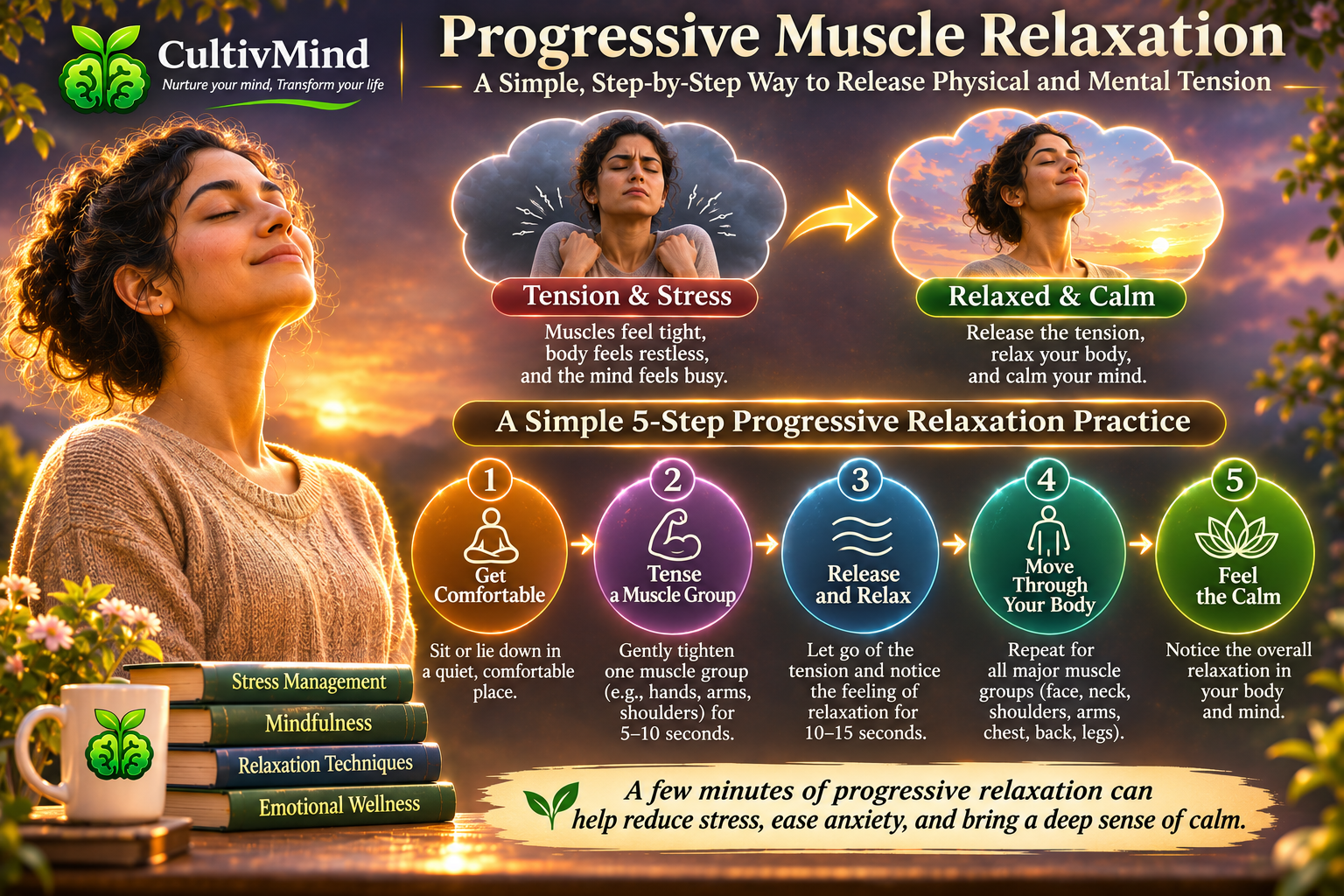
Progressive Muscle Relaxation (PMR) is a relaxation technique that involves intentionally tensing and then slowly releasing muscle groups throughout your body.
By becoming aware of tension and consciously letting it go, PMR teaches your mind and body how to relax more deeply, promoting calm and balance.
Why It Works
When anxiety rises, your body often reacts with physical tension — clenched jaws, tight shoulders, and shallow breathing.
PMR helps break this loop by activating the parasympathetic nervous system — your body’s natural ‘rest and digest’ mode — reducing stress hormones and relaxing the muscles.
Step-by-Step Guide (10 Minutes)
- Find a quiet place and sit or lie down comfortably.
- Take a few deep breaths to ground yourself.
- Start from your feet — tense the muscles for 5 seconds, then slowly release for 10 seconds.
- Move upward: feet → calves → thighs → stomach → arms → shoulders → neck → face.
- As you relax each area, notice the difference between tension and ease.
- Finish by taking three slow, calming breaths and feel the full-body relaxation.
Benefits of PMR
- •Reduces Stress & Anxiety: Releases stored tension and activates the body’s relaxation response.
- •Improves Sleep: Eases the transition into rest, helping you fall asleep faster and deeper.
- •Enhances Body Awareness: Increases sensitivity to where you hold tension and how to release it.
- •Lowers Blood Pressure: Encourages calm breathing and improves circulation.
- •Supports Mental Health: Used in therapy for anxiety, PTSD, and stress-related disorders.
Tips for Best Results
- Practice PMR once a day, preferably before bedtime or after stressful events.
- Avoid tensing too hard — gentle firmness is enough.
- Pair PMR with slow breathing or calming background music.
- Stay consistent — the benefits deepen with practice.
Science Behind PMR
Clinical studies show that PMR reduces cortisol (the stress hormone) and increases heart rate variability — a key sign of emotional resilience.
PMR is commonly used in psychotherapy and mindfulness programs to help regulate the nervous system and promote mental well-being.
FAQs
Frequently Asked Questions
How often should I practice PMR?
Ideally once daily, or whenever you feel tension building up. Even 5–10 minutes can help.
Can I practice PMR while sitting?
Yes. You can do PMR seated at your desk, during travel, or before sleep — comfort matters most.
Do I need to tense my muscles hard?
No. Use gentle pressure — just enough to notice the tension, not to cause strain or pain.
When will I notice the results?
Many people feel immediate calm after one session, but regular practice brings lasting relief and improved sleep.
Ready to put this into practice?
Follow a structured guided plan to strengthen your mental wellness habits.
Continue Reading & Exploring
Stress: Symptoms, Causes, Effects & Proven Management Strategies
Chronic stress wears down cognition, sleep, and emotional bandwidth. Learn practical autonomic nervous system regulators to recover your equilibrium.
15 Early Warning Signs of Burnout & Clinical Recovery Pathways
Burnout is not just being tired; it is systemic neurobiological depletion. Recognize the hidden cognitive and somatic warnings before total shutdown.
How Writing Can Gently Release Emotional Stress from Your Mind
Externalizing chaotic feelings onto paper relieves the working memory burden. Learn the science of emotional discharge through unedited expressive writing.