How Writing Can Gently Release Stress from Your Mind
Sometimes your mind feels heavy not because of what’s happening outside, but because of everything you’re holding inside. Writing gives those thoughts a place to go. Discover how simple, honest writing can help you release stress, clear your mind, and feel lighter without overthinking the process.
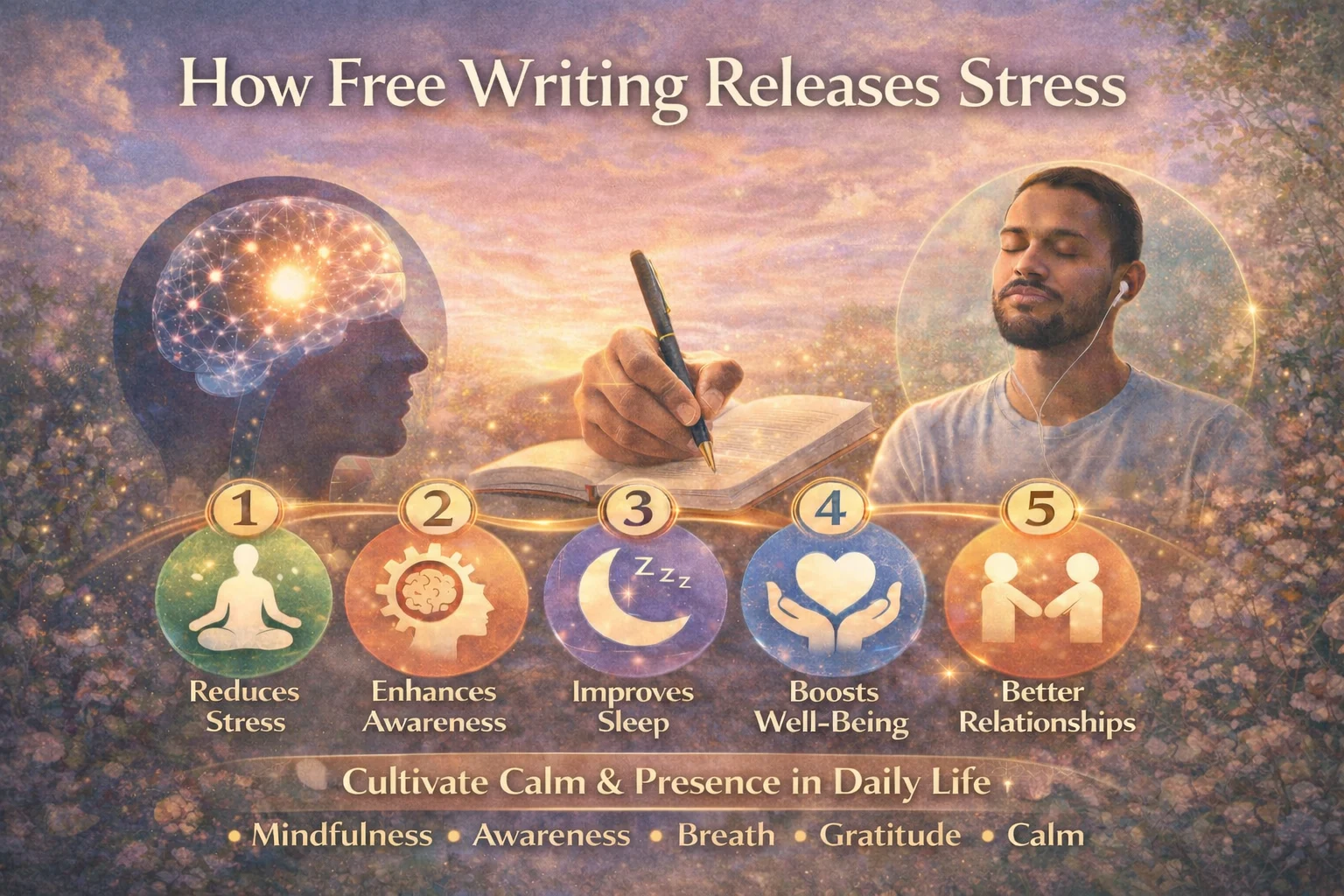
Why Writing Helps More Than You Think
There are days when your mind feels full, but you can’t explain exactly why. Thoughts keep moving, emotions feel stuck, and even small things start to feel overwhelming.
Writing works in a quiet way. It doesn’t try to fix everything instantly. Instead, it gives your mind space to breathe.
When you write, you’re not just putting words on paper — you’re slowly taking pressure off your mind.
What Happens When You Write Your Thoughts Down
- Your mind slows downThoughts that were rushing begin to settle because you’re focusing on one thing at a time.
- Emotions feel lighterFeelings that were stuck inside start moving instead of building pressure.
- Clarity begins to formThings that felt confusing slowly start making sense when you see them in words.
- You feel heard — by yourselfSometimes, writing is the only place where you can be completely honest without fear.
You Don’t Need to Be a Good Writer
This is important — writing for stress relief is not about grammar, vocabulary, or making it look good.
You don’t need perfect sentences. You don’t even need full sentences.
You just need honesty.
It can be messy, random, emotional, repetitive — that’s completely okay. The goal is not to impress anyone. The goal is to release what’s inside.
A Simple Way to Start (Free Writing)
- 1.📝 **Take a blank page** – It can be a notebook, phone notes, or anything simple.
- 2.⏳ **Set a timer for 5–10 minutes** – This removes pressure and gives you a clear starting point.
- 3.💭 **Write whatever comes to your mind** – Don’t stop, don’t edit, don’t judge.
- 4.🚫 **Don’t worry about structure** – It doesn’t have to make sense.
- 5.😌 **Stop when time ends** – Close it without overthinking what you wrote.
What You Can Write About (If You Feel Stuck)
- What’s bothering you right nowEven if it feels small or unclear, just start there.
- What you’re overthinkingLet those repetitive thoughts come out instead of staying inside.
- How your day actually feltNot what happened — but how it affected you.
- Things you’re not saying out loudWriting can hold what you can’t express to others.
Small But Real Benefits Over Time
At first, it might feel simple. Maybe even pointless. But slowly, something shifts.
Your mind doesn’t feel as crowded. You react less impulsively. You understand your emotions better.
And most importantly — you start feeling a little lighter after each session.
Not because everything is solved, but because you’re no longer holding everything inside.
When Writing Helps the Most
- At night before sleepHelps clear your mind so thoughts don’t follow you to bed.
- After a stressful dayReleases built-up tension instead of carrying it forward.
- When overthinking startsMoves thoughts out of your head and onto something real.
- When emotions feel heavyGives those feelings a safe place to exist.
A Gentle Reminder
You don’t have to write every day perfectly.
You don’t have to go deep every time.
Even a few honest lines are enough.
This is not a task. It’s a space — just for you.
FAQs
How long should I write for?
Even 5–10 minutes is enough. The goal is consistency, not duration.
What if I don’t know what to write?
Start with “I don’t know what to write…” and continue from there. Your mind will open up gradually.
Should I read what I wrote later?
You can, but it’s not necessary. Sometimes writing is just about releasing, not reviewing.
Is this a replacement for therapy?
No. Writing helps release stress, but professional support is important when needed.