The Power of Gratitude: Cultivating Positivity and Joy
Discover how gratitude transforms your mindset, enhances positivity, reduces stress, and improves relationships. Learn practical ways to practice gratitude daily for a happier and more fulfilled life.
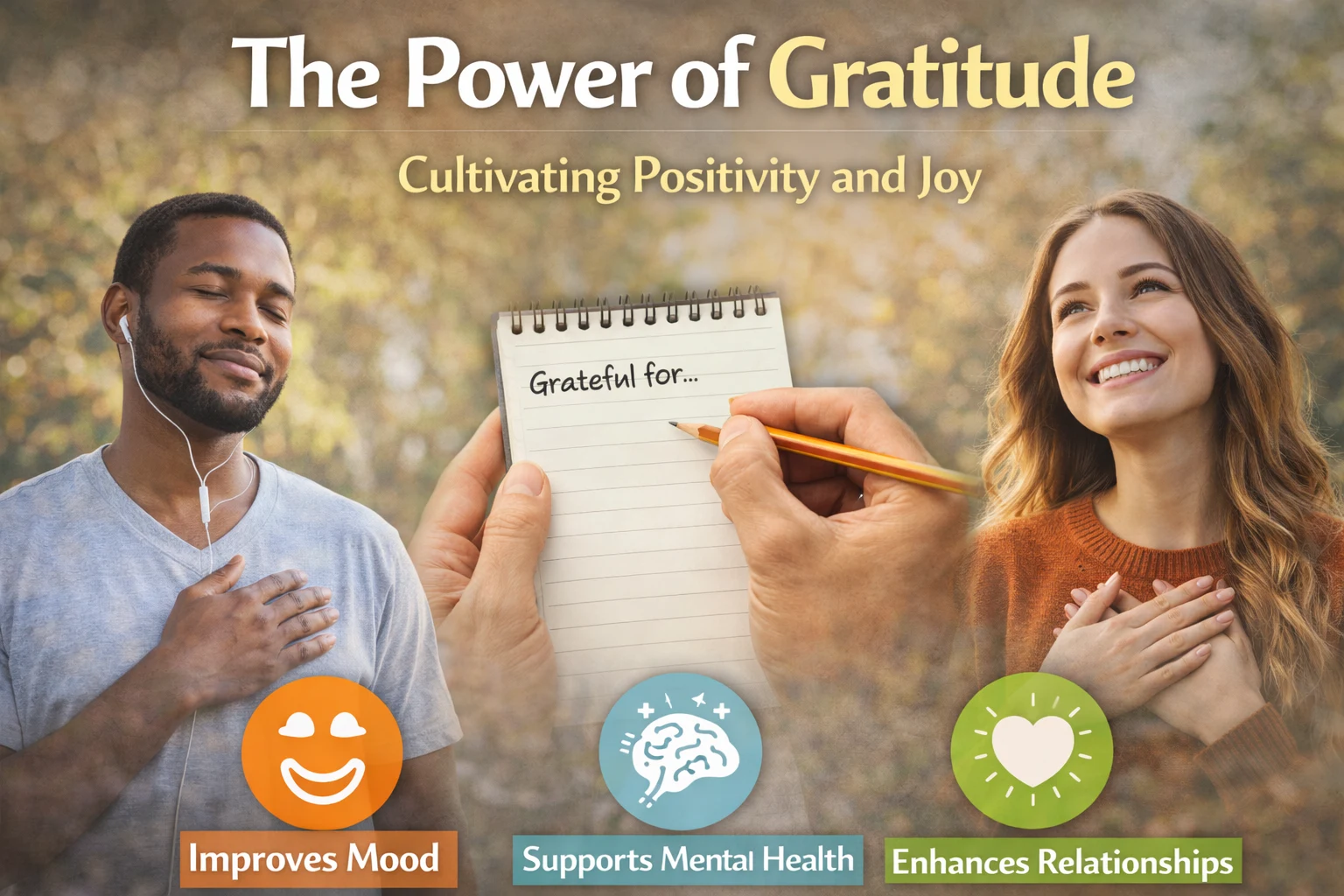
What is Gratitude?
Gratitude is the practice of recognizing and appreciating the positive aspects of life, whether big or small.
It goes beyond simply saying 'thank you'—it’s about cultivating a mindset of appreciation and focusing on what we have rather than what we lack.
Practicing gratitude helps shift attention from negative thinking to a more optimistic and empowering perspective.
Benefits of Practicing Gratitude
- Boosts Positivity: Gratitude helps reframe challenges and focus on what’s going well.
- Reduces Stress: Acknowledging positives lowers anxiety and promotes relaxation.
- Improves Sleep: Grateful thoughts before bed can improve rest and reduce overthinking.
- Strengthens Relationships: Expressing appreciation builds trust and deeper emotional bonds.
- Supports Resilience: Gratitude helps people recover faster from setbacks and maintain hope.
- Enhances Well-being: Practicing gratitude is linked to greater happiness and life satisfaction.
Ways to Practice Gratitude
- Keep a gratitude journal by writing down 3 things you’re grateful for daily.
- Start or end your day by reflecting on positive experiences or moments.
- Express appreciation to friends, family, or coworkers through notes or words.
- Practice gratitude meditation by focusing on people or things you value.
- Shift negative thoughts by asking, 'What can I be thankful for in this situation?'
- Celebrate small wins instead of waiting for big achievements.
Challenges in Practicing Gratitude
- Negativity Bias: The brain tends to focus on problems rather than positives.
- Comparison: Measuring against others can reduce feelings of gratitude.
- Routine Fatigue: Repeating the same practice may feel less impactful over time.
- Stressful Times: During difficulties, it may be harder to notice positives.
Integrating Gratitude into Daily Life
Pair gratitude with everyday routines—for example, think of one thing you’re grateful for while brushing your teeth.
Create gratitude rituals, like sharing one positive thing at family dinners.
Use reminders (sticky notes, phone alerts) to pause and reflect on what’s going well.
Write gratitude letters to people who made a difference in your life, even if you don’t send them.
Practice mindful appreciation—notice the beauty in nature, food, or simple daily moments.
FAQs
Why is gratitude important?
Gratitude shifts focus from what’s missing to what’s present, boosting positivity, improving mental health, and strengthening relationships.
Can gratitude improve mental health?
Yes. Studies show that practicing gratitude reduces stress, anxiety, and depression while increasing happiness and resilience.
How do I start practicing gratitude?
Begin with simple steps like keeping a gratitude journal, writing down 3 things daily, or expressing thanks to others.
Does gratitude make you more positive?
Yes. Gratitude helps train your brain to notice good things, creating a more optimistic and hopeful outlook on life.
Can I practice gratitude during tough times?
Absolutely. Even small acknowledgments—like appreciating supportive people or simple comforts—can ease stress and build resilience during hardships.