Screen Time Effects on the Brain: Dopamine, Focus & Anxiety Explained
Learn how screen time affects your brain, how reels and algorithmic feeds impact dopamine, and why digital overload increases anxiety. Practical steps to regain focus.
Many students spend hours on reels, YouTube, and social media every day. It feels normal — but slowly, it can affect your focus, mood, and even your sleep.
Let’s understand what is really happening inside your brain 👇
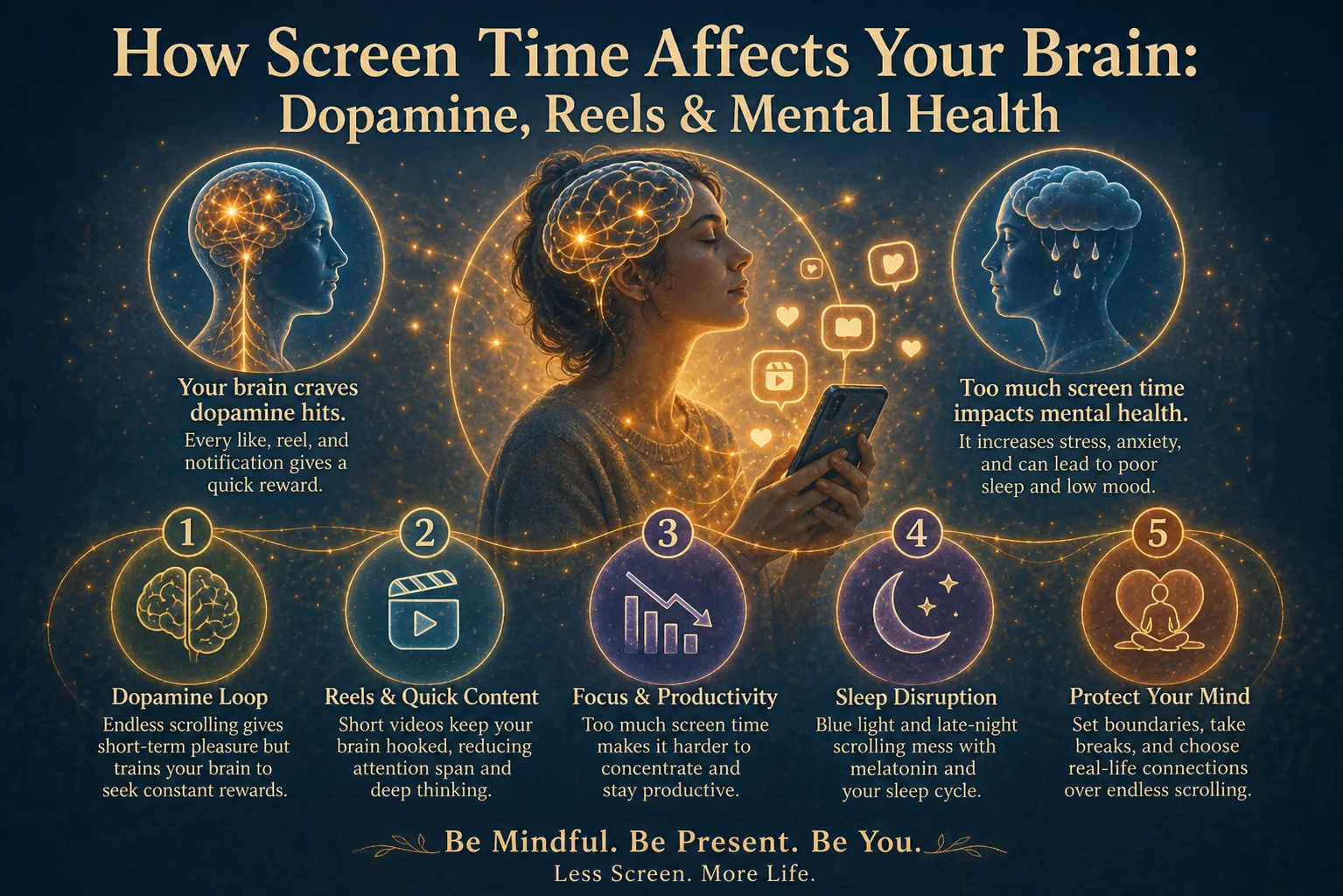
What is Digital Overuse and How Does Screen Time Affect the Brain?
Screen time means the amount of time you spend using your phone, watching videos, scrolling social media, or playing games.
Today, many students spend 4 to 8 hours daily on screens without even realizing it.
It may feel normal, but too much screen time can quietly affect your brain and mental health.
The Neurological Impact of Algorithmic Screens on Dopamine
Your brain is designed to focus on one thing at a time. But when you scroll fast content, your brain keeps switching again and again.
This makes your mind feel tired, distracted, and restless.
Over time, it becomes harder to focus on studies, reading, or even simple tasks.
Dopamine: Why Reels and Short Videos Feel So Addictive
Dopamine is a chemical in your brain that makes you feel good and excited.
When you watch reels, short videos, or scroll social media, your brain gets quick dopamine again and again.
Each swipe gives a new reward — something funny, shocking, or interesting.
Because of this, your brain starts craving more and more scrolling.
Short Videos: Fast content gives quick pleasure but reduces patience.
Endless Scrolling: Your brain never gets a break, so it keeps wanting more.
Instant Reward: You feel good quickly, but the feeling doesn’t last long.
Feeling distracted or overwhelmed?
Try a simple 2-hour digital detox and notice the difference.
Start DetoxDigital Fatigue, Continuous Partial Attention & Heightened Anxiety
When your brain gets too much information, it becomes overloaded.
This can lead to overthinking, restlessness, and anxiety.
Constant scrolling also keeps your mind active even when your body is tired.
This is why many people feel stressed even after using their phone for a long time.
Physical and Emotional Red Flags of Screen Overuse
Low Focus: You may find it hard to study or concentrate.
Overthinking: Your mind keeps running with too many thoughts.
Sleep Problems: Using phone at night can disturb your sleep cycle.
Comparison: Seeing others online can make you feel not good enough.
Feeling Low: Too much scrolling can slowly affect your mood.
Signs You May Be Experiencing Digital Overload
You feel restless when you are not using your phone.
You open apps without thinking.
You lose track of time while scrolling.
You feel tired but still keep watching videos.
5 Practical Behavioral Boundaries to Regain Deep Focus
- Check your daily screen time honestly.
- Start with small breaks like 30 minutes without phone.
- Keep your phone away while studying.
- Replace screen time with simple offline activities.
- Avoid using phone before sleeping.
The 48-Hour Digital Reset Protocol
More screen time = more noise in your mind.
Less screen time = more calm and clear thinking.
You don’t need to stop everything. Just start noticing and reducing slowly.
FAQs
How much screen time is okay for students?
2 to 3 hours for entertainment is generally considered okay. More than that can start affecting focus and mental health.
Why are reels so addictive?
Reels give quick dopamine rewards. Your brain enjoys it and keeps wanting more, which makes it hard to stop.
Can screen time cause anxiety?
Yes. Too much screen time can overload your brain, increase overthinking, and make you feel anxious or restless.
How can I reduce screen time easily?
Start small. Take short breaks, keep your phone away during study, and choose simple offline activities.