Self-Encouragement: Mastering Positive Self-Talk, Building Resilience, and Boosting Confidence
Discover the power of self-encouragement to overcome self-doubt, enhance mental resilience, and cultivate lasting confidence. Learn practical techniques, daily affirmations, and evidence-based strategies from positive psychology for a stronger, more motivated you.
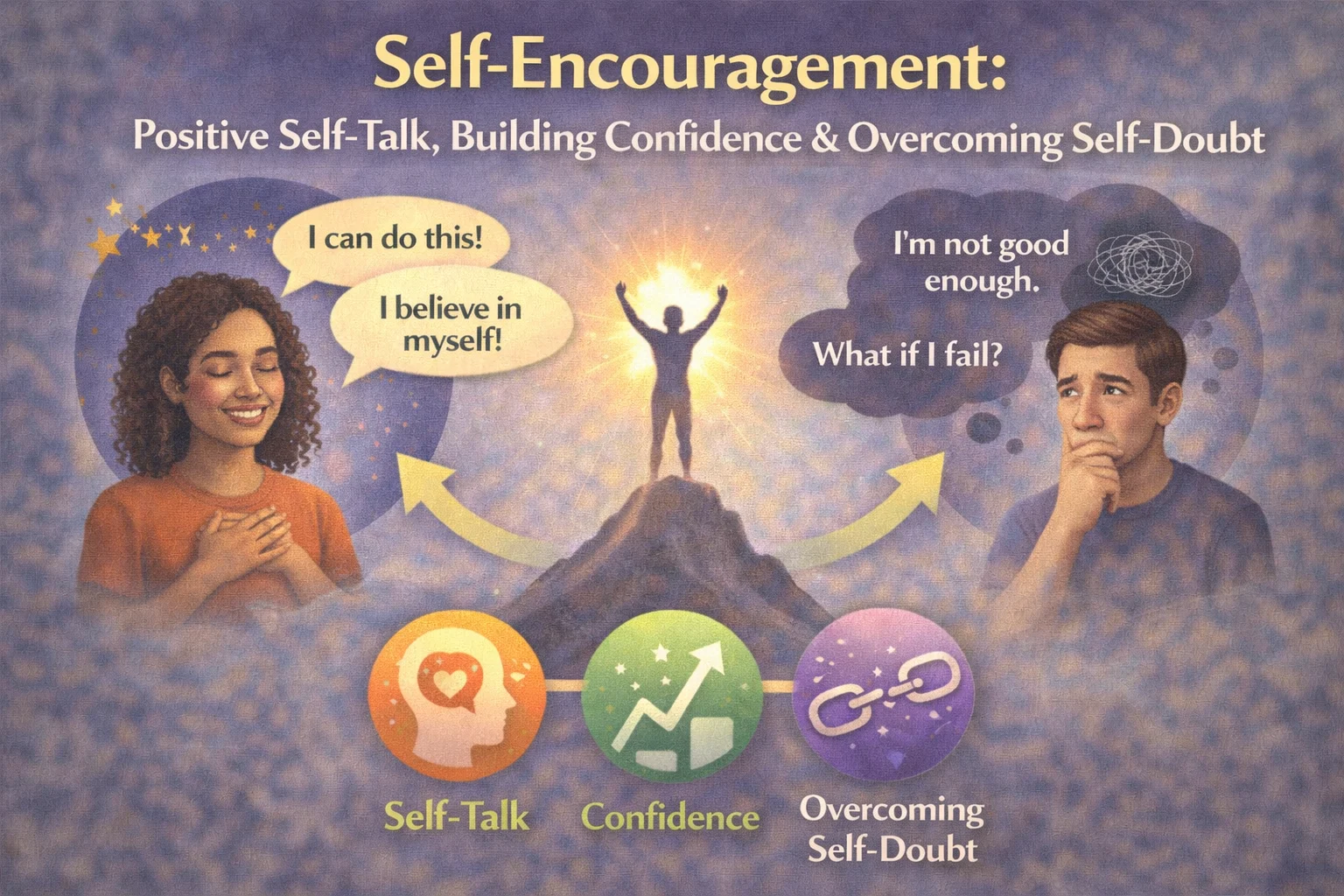
What is Self-Encouragement?
Self-encouragement is the intentional practice of offering yourself the same kindness, support, and motivation you would give a close friend. It goes far beyond superficial “positive thinking” — it is a skill rooted in positive psychology and cognitive behavioral principles that rewires how we respond to challenges.
In clinical practice, I have seen time and again that individuals who cultivate self-encouragement develop greater emotional stability, higher resilience, and a deeper sense of agency over their lives. It is not about ignoring difficulties; it is about meeting them with compassion and constructive action.
When practiced consistently, self-encouragement becomes an internal compass that guides you through setbacks, uncertainty, and everyday pressures.
Signs You May Need Stronger Self-Encouragement
- Emotional Signs: Frequent feelings of inadequacy, persistent self-criticism, or emotional exhaustion even after small tasks.
- Cognitive Signs: Constant negative self-talk, catastrophizing outcomes, or difficulty believing in your own abilities.
- Behavioral Signs: Procrastination, avoiding new opportunities, or giving up quickly when faced with obstacles.
- Physical Signs: Tension headaches, disrupted sleep, or low energy linked to ongoing self-doubt and inner conflict.
Proven Benefits of Regular Self-Encouragement
- Increased Confidence: You begin to trust your decisions and value your worth without needing external validation.
- Greater Resilience: Setbacks feel temporary rather than defining, allowing faster recovery and growth.
- Improved Mental Health: Reduced anxiety, lower stress levels, and a more balanced emotional state.
- Better Performance: Enhanced motivation, focus, and persistence toward personal and professional goals.
- Healthier Relationships: When you treat yourself with compassion, you naturally extend the same to others.
Common Causes of Self-Doubt and Low Self-Encouragement
- Early Experiences: Childhood criticism, high parental expectations, or bullying that shaped negative core beliefs.
- Perfectionism: Unrealistic standards that turn every mistake into proof of personal failure.
- Social Comparison: Constant exposure to curated success stories on social media that distort self-perception.
- Past Failures: Unprocessed setbacks that create a fear of trying again.
- Chronic Stress: Ongoing pressure that depletes mental resources needed for self-compassion.
Evidence-Based Techniques for Self-Encouragement
- Positive Self-Talk & Affirmations: Replace harsh inner dialogue with grounded statements such as “I am capable of learning from this” or “I have overcome challenges before and I can do it again.” Repeat 3–5 times daily, ideally while looking in a mirror.
- Self-Compassion Practice: Speak to yourself as you would to someone you deeply care about. Use Kristin Neff’s framework: acknowledge the pain, remember common humanity, and offer kindness.
- Small-Win Journaling: Each evening note three things you handled well — no matter how small. This rewires the brain to notice progress instead of flaws.
- Visualization with Emotion: Spend 2–3 minutes imagining yourself succeeding while feeling the pride and calm that comes with it. Athletes and high performers use this technique daily.
- Mindful Pause Technique: When self-doubt arises, pause, place a hand on your heart, and ask: “What do I need right now?” This interrupts the automatic negative cycle.
Daily Routine for Building Lasting Inner Strength
- Morning: 3 grounding affirmations spoken aloud while breathing deeply.
- Midday: One mindful pause during a stressful moment — acknowledge the feeling and offer yourself encouragement.
- Evening: Write three small wins and one compassionate statement about any struggle.
- Weekly: Review your journal and celebrate progress with a meaningful reward.
- Ongoing: Limit comparison triggers (e.g., social media time caps) and surround yourself with supportive voices.
Lifestyle Foundations That Support Self-Encouragement
Self-encouragement thrives when your body and mind are cared for. Consistent sleep, movement, and nourishing food create the energy needed for positive inner dialogue.
Nature walks, creative hobbies, and meaningful connections act as natural boosters. Even 10 minutes of mindful movement or quiet reflection can shift your entire outlook.
Remember: lasting change comes from small, repeated acts of kindness toward yourself — not from perfection.
FAQs
Is self-encouragement the same as positive thinking?
No. Positive thinking can sometimes feel forced or dismissive of real difficulties. Self-encouragement is more balanced — it acknowledges challenges while actively supporting yourself through them with compassion and realistic action.
How long until I notice results?
Most people feel a shift within 2–4 weeks of daily practice. Deeper changes in confidence and resilience usually appear after 8–12 weeks of consistent effort.
Can self-encouragement replace therapy?
It is a powerful complement to professional support but does not replace it when deeper trauma, clinical depression, or anxiety disorders are present. Many clients use both together for the best outcomes.
What if negative thoughts keep coming back?
This is normal. The goal is not to eliminate every negative thought but to respond to them with kinder, more helpful ones. Over time the positive voice grows stronger.