Self-Esteem: Meaning, Signs, Causes & How to Build Healthy Self-Worth
Understand what self-esteem truly means, how it affects your thoughts, relationships, and success, and practical ways to build lasting self-confidence and self-respect.
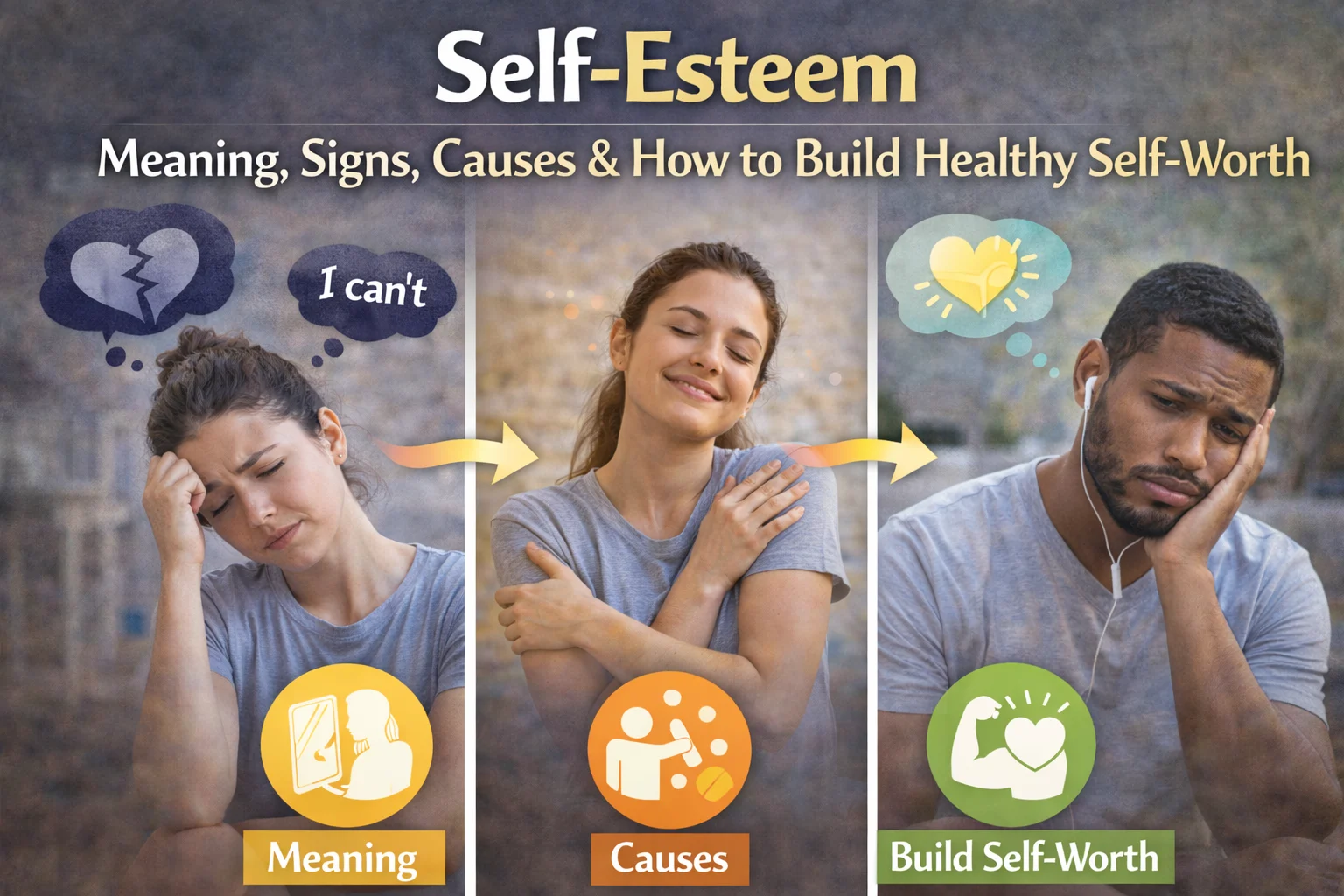
What is Self-Esteem?
Self-esteem is the way we see and value ourselves. It reflects our inner belief about whether we are capable, worthy, and deserving of happiness.
At its core, self-esteem has two important parts: confidence in our ability to think and handle life’s challenges (self-efficacy), and confidence in our right to be happy and fulfilled (self-respect).
To trust your own mind and to know that you deserve happiness — that is the essence of healthy self-esteem.
Why Self-Esteem Matters
The level of our self-esteem influences how we act — and how we act, in turn, shapes our self-esteem.
It affects how we perform at work, how we handle relationships, how ambitious we feel, and how much joy we allow ourselves to experience.
Our deepest vision of who we are — our self-concept — guides our choices, decisions, relationships, and ultimately the kind of life we create.
Signs of Healthy Self-Esteem
- Confidence in Thinking: You trust your ability to understand, learn, and solve problems.
- Emotional Balance: You can manage anxiety or insecurity without feeling overwhelmed.
- Openness to Feedback: You are comfortable admitting mistakes and learning from them.
- Healthy Assertiveness: You can express your needs clearly without being aggressive or defensive.
- Respect for Self and Others: You treat others with dignity because you feel secure within yourself.
- Comfort with Compliments: You are able to give and receive appreciation naturally.
Signs of Low Self-Esteem
- Persistent Self-Doubt: A constant feeling of not being 'enough' or capable.
- Fear-Based Decisions: Avoiding opportunities due to fear of failure or judgment.
- Excessive Guilt or Shame: Harsh self-criticism even for small mistakes.
- Overcompliance or Overcontrol: Either pleasing others excessively or trying to control everything.
- Fear of Success: Worry about responsibilities, visibility, or expectations that come with achievement.
- Avoidance of Reality: Ignoring facts about yourself or situations because they feel threatening.
Emotional Impact of Low Self-Esteem
When self-esteem is low, fear often becomes the driving force. Fear of failure, fear of exposure, fear of being judged, or even fear of success.
Instead of living to experience joy, we may start living mainly to avoid pain.
Many struggles — relationship conflicts, career stagnation, anxiety, or perfectionism — often have a deeper root in a sense of inadequacy or lack of self-acceptance.
How Healthy Self-Esteem Changes You
As self-esteem grows, your presence changes naturally. You may notice more ease in your voice, body language, and interactions.
You become more curious about life — open to new ideas, experiences, and possibilities.
You feel more centered during stress and more playful when facing challenges, because you trust your ability to handle them.
You are more likely to build nourishing relationships, as emotional health is attracted to emotional health.
Physical Signs of Growing Self-Confidence
- Eye Contact: Your eyes appear more alert and lively.
- Relaxed Posture: Shoulders are relaxed yet upright; movements feel natural.
- Facial Expression: A relaxed face with natural expressions rather than tension.
- Calm Body Language: Hands and gestures become more steady and graceful.
Ways to Build Healthy Self-Esteem
- Practice self-awareness — notice your inner dialogue without harsh judgment.
- Challenge negative self-beliefs and replace them with realistic, balanced thoughts.
- Set small, achievable goals to build confidence through action.
- Learn to say no and express your needs respectfully.
- Surround yourself with supportive and growth-oriented people.
- Accept mistakes as part of learning, not as proof of inadequacy.
- Invest in therapy or counseling if deep-rooted shame or self-doubt feels overwhelming.
- Celebrate effort and progress, not just outcomes.
The Long-Term Benefits of Healthy Self-Esteem
Higher self-esteem is linked with rational thinking, creativity, flexibility, independence, and resilience.
It encourages ambition — not only in career or finances, but emotionally, creatively, and spiritually.
Most importantly, it allows you to experience the simple joy of being alive — waking up in the morning with a sense that your life matters.
FAQs
Is self-esteem the same as confidence?
Confidence usually refers to belief in your abilities in specific areas, while self-esteem is a broader sense of self-worth and deservingness of happiness.
Can self-esteem be improved at any age?
Yes. Self-esteem is not fixed. With awareness, effort, and sometimes professional support, it can improve at any stage of life.
What causes low self-esteem?
Common causes include childhood criticism, trauma, repeated failure, unhealthy comparisons, bullying, perfectionism, or emotionally invalidating environments.
How does self-esteem affect relationships?
Healthy self-esteem helps create balanced, respectful relationships. Low self-esteem may lead to dependency, jealousy, avoidance, or fear of intimacy.
When should I seek professional help?
If feelings of shame, inadequacy, or self-doubt are persistent and affecting work, relationships, or daily life, consulting a mental health professional can be very helpful.